All StoriesNature
Hunza Valley Travel Guide (2026): Costs, Itinerary & Things to Do
Ahmad Faraz 16 min0
Photo by Alllexxxis, via Wikimedia Commons (CC BY-SA 4.0)Website
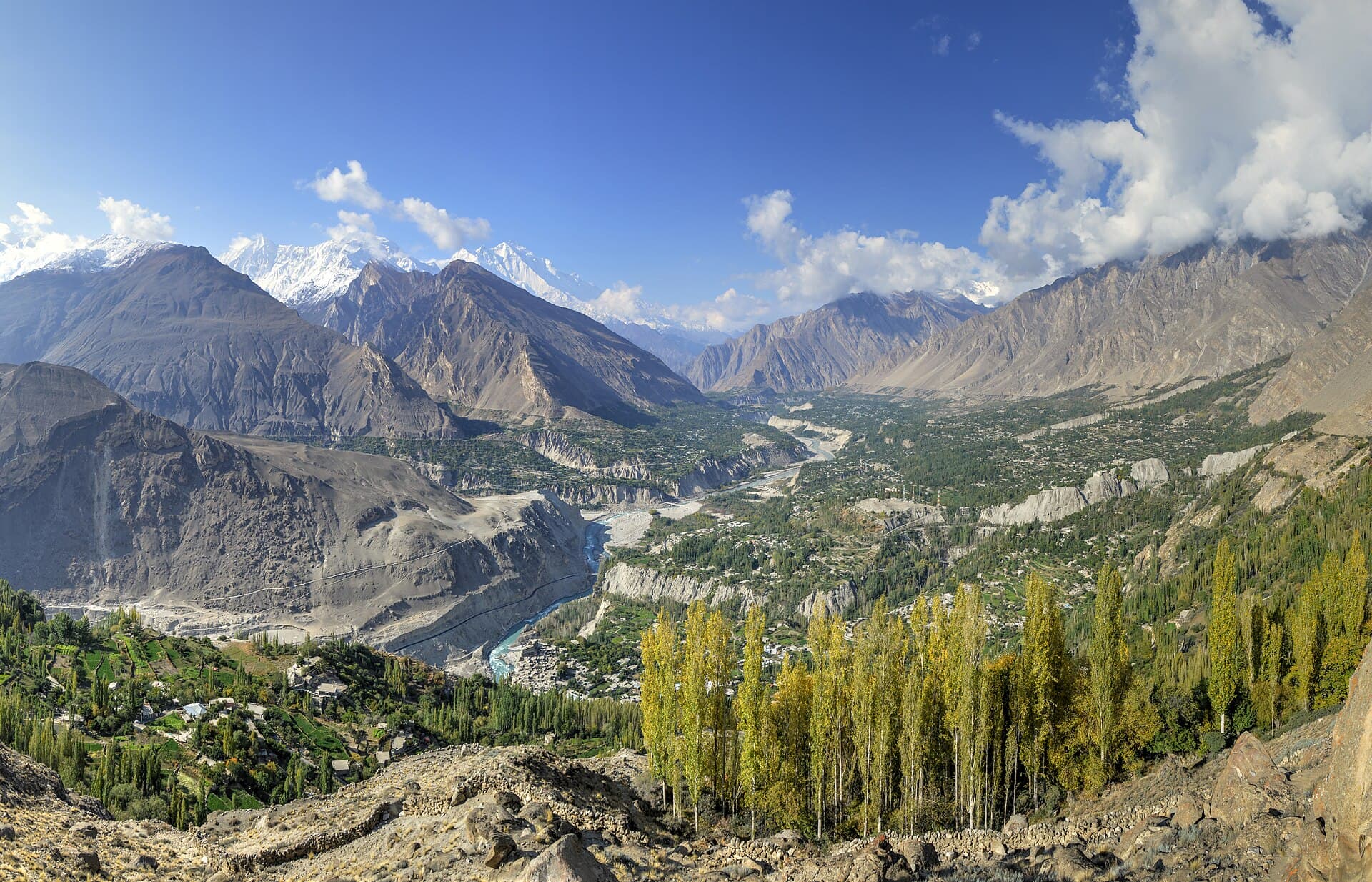
Ask ten Pakistani travelers to name the most beautiful place in the country and eight will say Hunza. Ask the two who didn't, and they'll admit they haven't been yet. This valley in the heart of the Karakoram, with its terraced orchards under 7,000-metre peaks, a turquoise lake that swallowed a highway, and forts older than most countries, has become the crown jewel of Pakistani tourism. Unlike many famous places, it actually deserves the hype.
This guide covers everything we tell friends and clients who ask us about Hunza: how to get there (with real fares, not tour-package marketing), when to go, where to stay at every budget, what to eat, and how many days you genuinely need. Prices are in Pakistani rupees with rough dollar equivalents, current as of mid-2026. Northern-areas prices move with fuel and season, so treat every figure as a starting point for haggling, not gospel.
Where is Hunza, exactly?
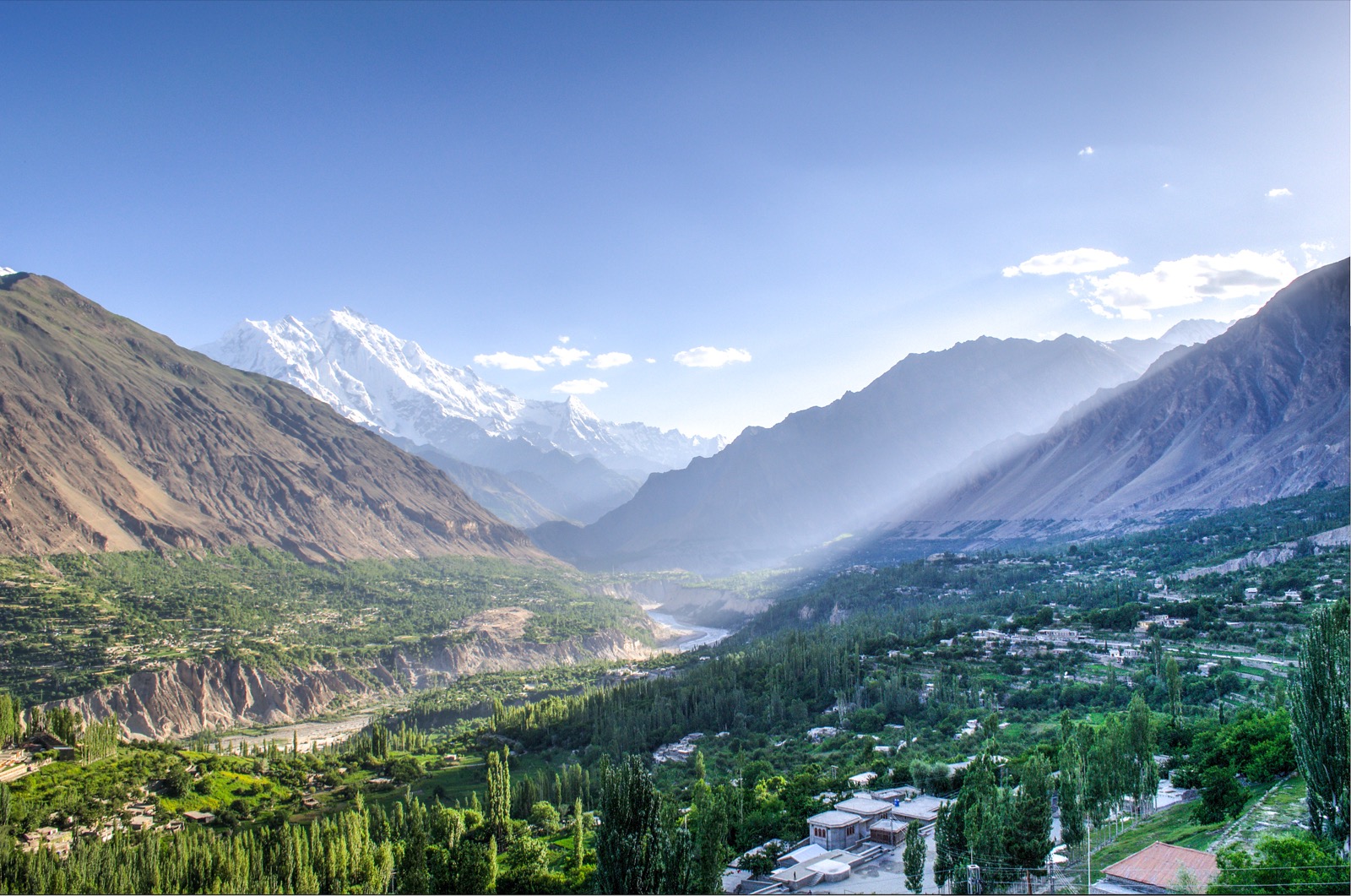
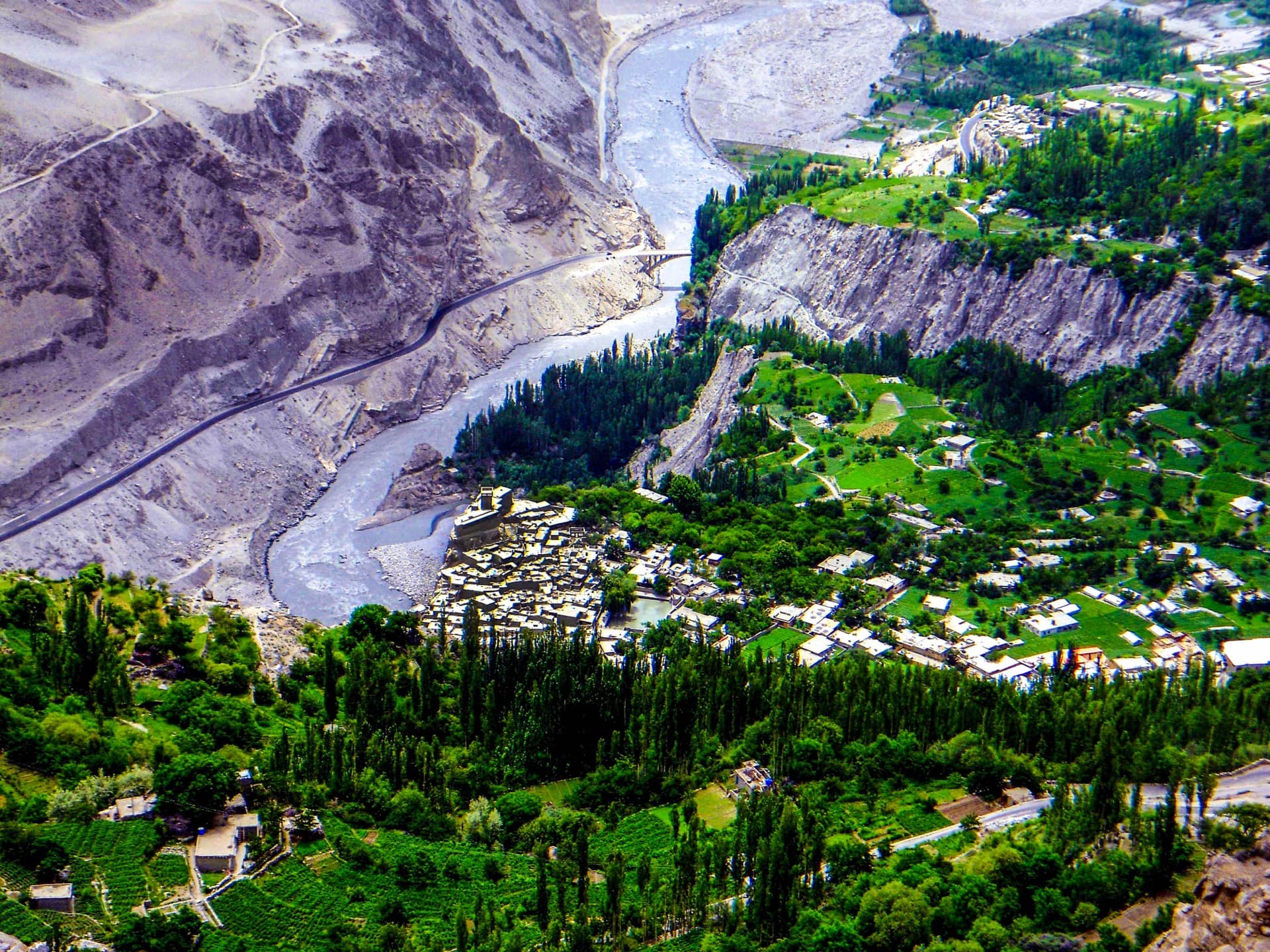
Hunza sits in the far north of Gilgit-Baltistan, along the Hunza River and the Karakoram Highway (KKH), roughly 100 km north of Gilgit city and about 600 km from Islamabad by road. The valley floor sits above 2,400 metres, and the border with China at Khunjerab Pass, the highest paved border crossing on Earth at 4,693 m, is only a few hours' drive from its upper villages.
Locals divide the valley into three parts, and it helps to think the same way when planning:
- Central Hunza: Karimabad, Altit, Aliabad and Duikar. The forts, the famous viewpoints, most hotels and restaurants. This is where you'll sleep most nights.
- Gojal (Upper Hunza): Gulmit, Ghulkin, Passu and Hussaini. Attabad Lake, the Passu Cones, suspension bridges and glaciers. Day-trip territory, or better, a night or two.
- The side valleys: Shimshal, Chapursan, and across the river in Nagar, Hopar and Minapin. Raw, high, and unforgettable, for travelers with extra days and flexible plans.
How to reach Hunza from Islamabad
By road (most travelers)
The drive from Islamabad is long, around 14 to 16 hours in practice, but it's also one of the great road journeys of the world. You have two route options:
- Karakoram Highway via Besham and Chilas: open year-round, passes Nanga Parbat viewpoints. Roadworks can slow sections; start early.
- Naran and Babusar Pass route: shorter and far more scenic, but the 4,173 m pass only opens from roughly late May to October. If it's open, take it at least one way.
Your options, by budget:
- Public bus (NATCO, Faisal Movers and others): roughly PKR 4,000 to 8,000 one way to Aliabad or Karimabad depending on class and season. Book a day ahead in summer.
- Shared car from Gilgit: if you fly or bus to Gilgit first, shared cars run up the KKH for a few hundred rupees per seat between towns.
- Private car with driver: PKR 25,000 to 40,000 or more each way depending on vehicle and negotiation. Splits well between four people, and you can stop at every viewpoint. You will want to.
- Self-drive: the KKH is paved and in good shape most of the way. Fuel both ways for a sedan runs roughly PKR 30,000 to 40,000 from Islamabad. Fill up in Chilas or Gilgit; pumps thin out after that.
By air (fastest, least reliable)
PIA flies Islamabad to Gilgit daily on small turboprops. It's about an hour in the air and one of the most spectacular commercial flights anywhere, with Nanga Parbat filling the window. Fares run PKR 20,000 to 30,000 round trip. The catch: the flight is weather-dependent and cancellations are routine. Never put a Gilgit flight the day before an international connection. From Gilgit airport, Hunza is a 2 to 3 hour drive.
Our honest advice: fly up if the weather window looks good, but plan as if you'll drive back. The disappointment of a cancelled mountain flight is real; the KKH consolation prize is not a bad one.
Best time to visit Hunza
There is no bad season in Hunza. There are four different Hunzas, and you should pick the one you actually want:
- Late March to mid-April, blossom season. The entire valley turns pink and white with apricot and cherry blossom. Cool days, cold nights, fewer crowds than summer. For photographers, this is the season.
- May to September, peak season. Warm days, every trail and pass open, Babusar route running, alpine lakes warm enough to swim in by July. Also the busiest and most expensive months; book Karimabad hotels ahead for June to August.
- Mid-October to mid-November, autumn. The poplars and orchards go gold and crimson, the air is glass-clear, and the summer crowds are gone. Many Hunza regulars, us included, call autumn the valley's best-kept open secret.
- December to February, winter. Brutally cold and stunningly quiet. Hunza sits in a rain shadow, so skies stay surprisingly clear, but many hotels lack proper heating and some close entirely. For experienced travelers only, and the hotel rates drop by half.
Where to stay
Base yourself in Central Hunza (Karimabad, Altit or Duikar) for the majority of your stay, with an optional night in Gojal. Realistic 2026 rates per double room:
- Budget (PKR 3,000 to 6,000/night): family-run guesthouses in Karimabad's backstreets and in Gulmit and Passu. Expect simple rooms, mountain views that five-star hotels can't buy, and home-cooked dinners. In Passu, backpacker favorites like Cathedral View offer beds at the lowest prices in the valley.
- Mid-range (PKR 8,000 to 18,000/night): solid hotels around Karimabad bazaar and Aliabad with reliable hot water, generators or solar backup, and Wi-Fi. This tier is the sweet spot for most families.
- Top end (PKR 25,000+/night): the Serena property and the newer luxury hotels around Duikar near Eagle's Nest, where you wake up to sunrise over six 7,000-metre peaks without leaving your bed.
One principle we'd urge regardless of budget: book locally-owned places. Tourism is Hunza's lifeline, and the valley has visibly benefited from money staying in the community. It's part of why Hunza is the cleanest, best-organized tourist destination in Pakistan.
Things to do in Hunza
1. Baltit and Altit Forts
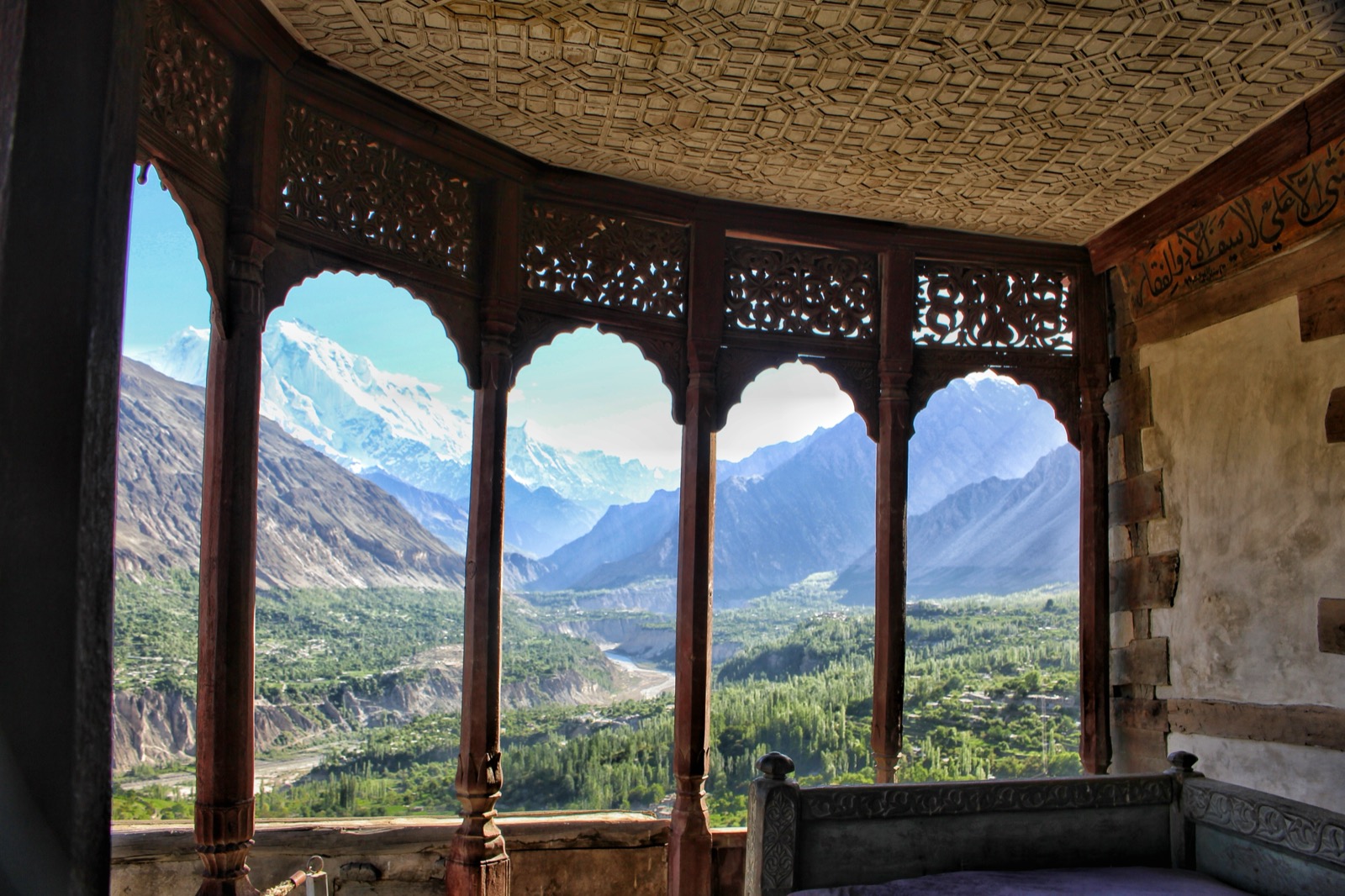
The two forts are Hunza's historical anchors. Altit is the older, roughly 1,000 years, perched on a cliff over the river with the lovely Royal Garden below it. Baltit, the 700-year-old former seat of the Mirs of Hunza, looms over Karimabad like something from a storybook and houses an excellent museum. Both are beautifully restored. Open 9am to 5pm; entry around PKR 500 to 800 for Pakistanis and PKR 1,200 to 1,500 for foreigners. Do both. They're different enough to justify it.
2. Attabad Lake
Born in tragedy when a 2010 landslide buried the village of Attabad and dammed the river, the lake is now Hunza's most photographed sight, an implausible electric blue between bare rock walls. Boating is the classic family activity; jet skis and lakeside cafes have multiplied in recent years. Go early morning to beat the day-trip rush from Karimabad. Skip the most built-up section near the tunnel mouth and walk ten minutes for quieter shoreline.
3. Eagle's Nest at Duikar
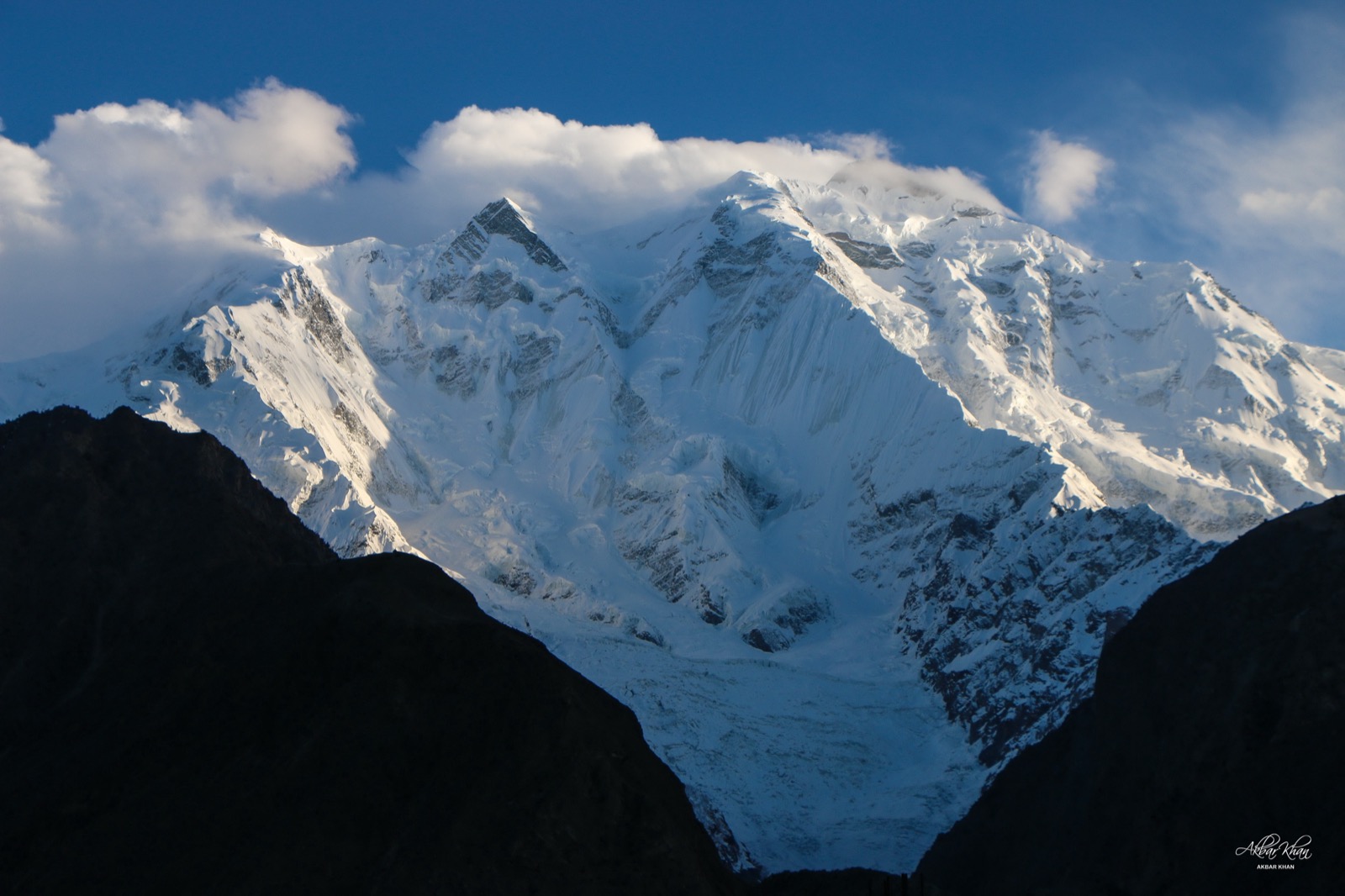
The viewpoint above Duikar village serves the valley's definitive panorama: Rakaposhi, Diran, Golden Peak and Ultar Sar in one sweep. Everyone goes for sunset; sunrise is emptier and, with morning light hitting the peaks, arguably better. If your budget allows, sleeping in Duikar beats driving up for an hour.
4. The Passu Cones
The jagged toothy ridgeline officially called Tupopdan is Pakistan's most recognizable mountain silhouette. You'll see it from the KKH north of Hussaini. Every pullout is a photo op, and the village of Passu beneath it deserves an afternoon of slow wandering.
5. Hussaini Suspension Bridge
Often billed as "the world's most dangerous bridge," which is marketing (it's locally maintained and crossed daily), but the widely-spaced planks over the grey rush of the Hunza River will absolutely get your heart rate up. Small crossing fee, a few hundred rupees for locals and around PKR 1,000 for foreigners; a zipline now runs alongside for the brave.
6. Walk on a glacier
The Karakoram holds more glacial ice than anywhere outside the polar regions, and Hunza is one of the easiest places on Earth to actually touch it. Passu Glacier (via Borith Lake's "Zero Point") and Ghulkin Glacier are reachable in under two hours' walking; across the river in Nagar, you can drive nearly to the snout of Hopar Glacier. No technical skill is needed for the viewpoints, but hire a local guide if you want to walk on the ice itself.
7. Khunjerab Pass, the China border
A 2 to 3 hour drive from Passu through Khunjerab National Park brings you to 4,693 m and the gates of China. Snow is possible even in July, yaks and ibex roam the park, and standing at the world's highest paved border crossing is simply a great story. Park entry: PKR 500 for Pakistanis, about USD 40 for foreigners. Go early, carry warm layers, and take the altitude seriously. Walk slowly up there.
8. Gulmit, Ghulkin and the old villages
Gojal's villages are where Hunza slows down. Climb the community-built stone staircase of Ondara Poygah above Gulmit, visit the women-run carpet workshop, eat at the women-owned Bozlanj cafe, and wander Ghulkin's lanes, invisible from the highway and all the better for it.
9. Borith Lake
A salty alpine lake tucked between Gulmit and Passu, warm enough for a swim in July and August, with kayak rentals and quiet cafes. A good half-day pairing with the Passu Glacier viewpoint hike.
10. Rakaposhi Base Camp trek
The valley's classic overnight trek starts in Minapin (Nagar) and climbs to around 3,500 m with the huge white wall of Rakaposhi overhead. It's a genuine trek: proper boots, reasonable fitness, one night camping or in seasonal huts. It is also the single best reward-per-effort hike in the region.
11. Shimshal Valley (for the adventurous)
Four hours up a single-lane cliff road from Passu lies Shimshal, the highest permanent settlement in Hunza at around 3,100 m and the home village of many of Pakistan's greatest mountaineers. Amenities are basic, the road demands a confident driver, and it is absolutely not a family day trip. That is exactly why it remains extraordinary.
12. Eat. Seriously.
Hunza's cuisine is unlike anything else in Pakistan: largely spice-free, built on apricots, walnuts, buckwheat, local cheese and glacier water. Order chapshoro (a meat-stuffed pastry that out-performs every fast-food wrap ever made), hoilo garma (hand-cut pasta with spinach and apricot oil), and molida. In Karimabad, Hunza Food Pavilion and the old Cafe de Hunza (famous for walnut cake) are institutions; in Passu, Glacier Breeze's apricot cake and the Yak Grill's yak burger are both worth the drive on their own. Wash everything down with fresh apricot juice.
How many days do you need?
- 3 days (the absolute minimum): Day 1: Karimabad, both forts, Eagle's Nest sunset. Day 2: Attabad Lake, Gulmit, Hussaini Bridge, Passu Cones, back to Karimabad. Day 3: morning in the bazaar, depart. Doable only if you've already made it to Hunza; don't drive 16 hours each way for this.
- 5 days (the sweet spot): the 3-day plan plus a full day in Gojal with Borith Lake and a glacier walk, and a day for Khunjerab Pass.
- 7+ days (the real Hunza): add Hopar Glacier, the Rakaposhi Base Camp overnight, or Shimshal. This is the trip you'll talk about for the rest of your life.
What does a Hunza trip actually cost?
Rough per-person figures for a 5-day trip from Islamabad, excluding shopping:
- Backpacker: bus both ways, guesthouses, local food: PKR 35,000 to 55,000
- Mid-range family (sharing a private car, decent hotels): PKR 70,000 to 110,000 per person
- Comfort-first (flights, top hotels, private 4x4): PKR 150,000+
Two honest notes on cost. First, tour packages advertising suspiciously low prices recover the difference somewhere, usually in hotel quality and rushed itineraries. Second, almost everything in Hunza is cheaper in blossom season and autumn than in mid-summer, and dramatically cheaper in winter.
Culture, etiquette and a few practicalities
- Hunza's population is majority Ismaili Muslim, and the valley is among the most progressive places in Pakistan. Literacy is near-universal, women run businesses everywhere, and visitors of all kinds are welcomed with genuine warmth. Dress modestly as you would anywhere in the north, and ask before photographing people.
- The local languages are Burushaski (Central Hunza, a language isolate related to nothing else on Earth), Wakhi (Gojal) and Shina. Urdu is universal and English is widely spoken by younger people.
- Connectivity: SCOM is the only network with usable data in most of the valley. Buy a SIM in Aliabad or Gilgit (foreigners need to purchase at a franchise). Hotel Wi-Fi exists but treat it as a bonus, not a promise.
- Safety: Hunza is, without exaggeration, one of the safest travel destinations in Asia. Solo women travel here routinely. The real risks are the mountain roads and the altitude, not people. Drive in daylight, acclimatize before hiking high, and carry cash (ATMs exist in Aliabad and Karimabad but can run dry in peak season).
- Foreigners: no special permit is needed for Hunza itself or Khunjerab; carry your passport for checkpost registrations along the KKH.
Planning your trip
Hunza rewards slow travel more than any destination in Pakistan. Give it the days it deserves, spend your money with local families, carry your rubbish out, and the valley will hand you the best week of your traveling life.
See the Hunza Valley destination page for the at-a-glance version of this guide, browse our other destination guides for more of northern Pakistan, or talk to us if you'd like help shaping a Hunza itinerary around your dates, group and budget. It's what we do.
For accommodation, see our where to stay in Hunza guide.
Related guides
See also our Fairy Meadows vs Hunza and Hunza vs Naran guides.
Last updated
Share this article
Frequently asked questions
- How many days are enough for Hunza Valley?
- Five days in the valley is the sweet spot, enough for Karimabad's forts, Attabad Lake, Gojal and Khunjerab Pass. Three days covers only the highlights, and a week lets you add a trek or Shimshal. Add two travel days if you're driving from Islamabad.
- How much does a Hunza trip cost from Islamabad?
- A 5-day trip runs roughly PKR 35,000 to 55,000 per person backpacker-style, PKR 70,000 to 110,000 mid-range with a shared private car, and PKR 150,000 or more with flights and top hotels. Spring and autumn are noticeably cheaper than peak summer.
- What is the best time to visit Hunza?
- Late March to mid-April for apricot and cherry blossoms, May to September for warm weather and open passes, and mid-October to November for autumn colors with far fewer crowds. Winter is beautiful but harsh, and many hotels close.
- Is Hunza safe for solo and female travelers?
- Yes. Hunza is one of the safest destinations in Asia. The Ismaili-majority valley is progressive, women are visible in public life everywhere, and solo female travelers visit routinely. The real risks are mountain roads and altitude, not crime.
- Do foreigners need a permit to visit Hunza?
- No special permit is required for Hunza Valley or the Khunjerab Pass border viewpoint. Carry your passport for routine checkpost registrations along the Karakoram Highway. Some restricted side areas beyond Shimshal require permissions arranged locally.
- Is there mobile network and internet in Hunza?
- SCOM is the only network with reliable data coverage in most of the valley. Buy a SIM in Gilgit or Aliabad. Other networks manage calls at best. Most mid-range hotels offer Wi-Fi, but speeds vary; don't plan video calls around it.