Photo by Shehal JosephWebsite
Biryani is, by common consent, Pakistan's national dish, the fragrant layered rice and spiced meat masterpiece that appears at every wedding, every celebration, every Sunday lunch and on every street corner. Few foods are loved so universally or argued over so passionately, and the question of who makes the best biryani is a national pastime that will never be settled. This guide tells the full story of Pakistani biryani: what it is, how it differs from pulao, where it came from, the regional styles, how it is cooked and eaten, and where to find the best plate.
What is biryani?
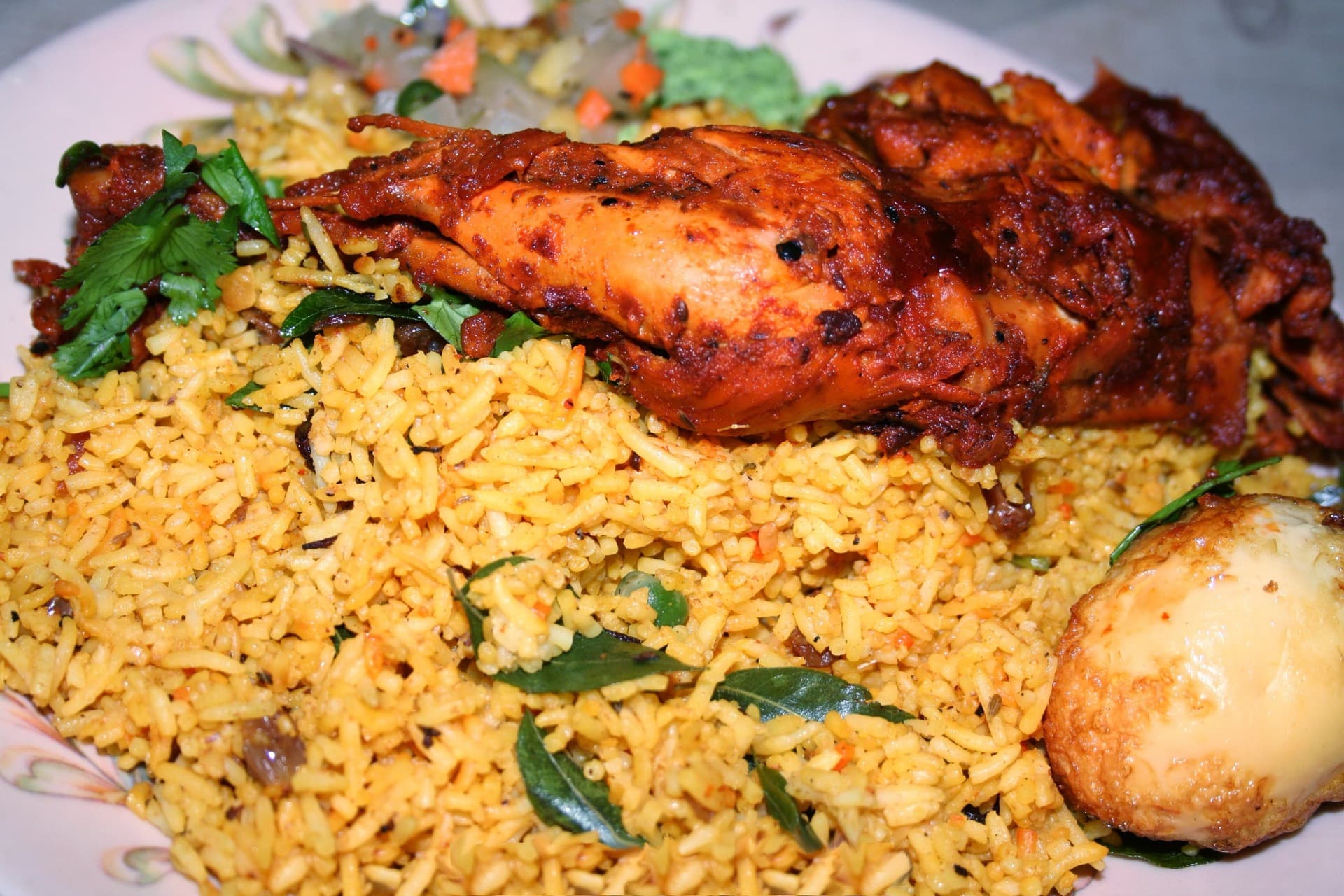
Biryani is a celebratory rice dish in which long grain basmati rice and spiced, marinated meat are partially cooked separately and then layered together and finished by steaming, so the rice absorbs the flavours of the meat and spices while staying separate and fragrant. The hallmarks are aromatic basmati, tender meat in a rich masala, the warmth of whole and ground spices, the colour and scent of saffron or food colour, fried onions, and finishing touches like mint, coriander and sometimes kewra or rose water. The result is a complex, layered dish where every forkful varies, some rice plain and fluffy, some soaked in masala, some with a piece of meat or potato. Rich, festive and deeply satisfying, biryani is the dish Pakistanis reach for whenever there is something to celebrate.
Biryani versus pulao
A common confusion is the difference between biryani and pulao, both rice and meat dishes. The key difference is in method and intensity. In pulao, the rice is cooked together with the meat and broth in one pot, so it takes on a uniform, milder colour and flavour. In biryani, the rice and the heavily spiced meat masala are cooked separately and then layered and steamed together, producing a much more intense, varied and aromatic result with distinct strata of flavour. Biryani is generally spicier, richer and more elaborate, a special occasion dish, while pulao is milder, lighter and more everyday. Both are beloved, but biryani is the showstopper, and knowing the difference is the mark of someone who takes their rice seriously.
A dish with Mughal and Persian roots
Biryani's origins lie in the Persian influenced kitchens of the Mughal era, and its very name is usually traced to Persian words connected to frying or roasting before cooking. Brought to the subcontinent and refined in the royal Mughal courts, it spread and diversified into countless regional forms across what is now Pakistan, India and beyond. In Pakistan, the dish took especially deep root after 1947, when Urdu speaking migrants from Delhi, Lucknow, Hyderabad and elsewhere brought their refined biryani traditions to Karachi and other cities, where they evolved into the bold, spicy styles loved today. From courtly origins, biryani became the food of everyone, served from grand wedding halls and humble street carts alike, and it remains the single most popular dish in the country.
The regional styles of Pakistani biryani

Pakistan has several distinct biryani traditions, each with passionate devotees. Sindhi biryani is perhaps the most famous, bold and spicy, layered with potatoes, plenty of masala, tomatoes, green chilli and often prunes or dried plums for a hint of sweetness and tang. The closely related Karachi biryani is the everyday street and home style of the megacity, similarly fiery and potato laden. Memoni and Bombay style biryanis, brought by migrant communities, are richer and tangier. The Hyderabadi tradition, also carried by migrants, is famous for its refined dum cooking. Lahori and Punjabi biryanis tend to be a touch milder and heavier on the masala in the Punjabi style. Beyond these, beef, chicken and mutton each have their devotees, with beef biryani especially associated with Karachi and the spicier southern styles. The variety is part of the fun, and our Karachi food guide digs into the city's biryani obsession.
The art of the dum
The secret to great biryani is the dum, the final slow steaming that marries the rice and meat. After the rice is parboiled and the meat cooked in its masala, the two are layered in a heavy pot, scattered with fried onions, mint, coriander, saffron milk and sometimes kewra, then sealed, traditionally with dough around the lid, and cooked on a very low heat so the trapped steam finishes the rice and melds the flavours without overcooking. This gentle, sealed steaming is what gives biryani its distinct layers and its intoxicating aroma when the lid is finally lifted. The balance is delicate: the rice must be perfectly separate and fluffy, neither hard nor mushy, the meat tender, the spicing bold but not overwhelming, and achieving all of this consistently is what separates a legendary biryani cook from an ordinary one.
How biryani is eaten
Biryani is a complete meal in itself, but it is never eaten entirely alone. The classic accompaniment is raita, a cooling yoghurt sauce with cucumber, onion or mint that balances the heat and richness of the rice. A simple kachumber salad of onion, tomato and cucumber, a wedge of lemon, and sometimes a thin curry called salan or a shami kebab on the side complete the plate. Biryani is eaten at all scales, a quick plate from a street cart for lunch, a generous home cooked pot for Sunday family lunch, or vast degs (cauldrons) cooked for weddings and religious occasions that feed hundreds. It is food for both the everyday and the momentous, and a steaming plate of biryani with raita is one of the most satisfying meals in all of Pakistani cuisine.
Where to find the best biryani

Biryani is everywhere in Pakistan, but Karachi is its spiritual home, the city that eats it most fervently and argues about it most fiercely, with legendary biryani spots that draw devoted crowds and inspire endless debate over which is supreme. The bold, spicy, potato laden Karachi and Sindhi styles set the standard for many Pakistanis. That said, every city has its beloved biryani houses, and a famous local biryani spot is a source of real pride and loyalty. As a visitor, the best approach is to ask locals for their favourite, accept that everyone disagrees, and try several: a street cart plate, a famous restaurant version, and if you are lucky, a home cooked or wedding biryani, which is often the finest of all. Wherever you eat it, biryani is one of the essential tastes of Pakistan.
Making biryani at home
Biryani is the dish Pakistani home cooks are perhaps most proud of, and a well made home biryani, slow steamed for a family gathering, is a thing of beauty. It is more involved than everyday cooking, requiring the meat masala and the rice to be prepared separately before layering and dum, but it is well within reach of a patient home cook, and ready made biryani masala mixes have made it more accessible than ever. The keys are good quality aged basmati rice, getting the rice parboiled to just the right point, a well balanced and generously spiced masala, plenty of fried onions, and careful, gentle dum so nothing overcooks. For travellers who fall for Pakistani biryani, a packet or two of a good biryani masala is among the best edible souvenirs to carry home, a way to bring at least a taste of the dish back to your own kitchen, even if the famous Karachi versions remain in a class of their own.
Why biryani matters so much
It is hard to overstate the place biryani holds in Pakistani life. It is the default celebration food, served at weddings, on Eid, at birthdays and at every occasion worth marking, and the smell of biryani cooking signals that something special is happening. It crosses every regional, ethnic and class line, eaten and loved by everyone, and the friendly arguments over whose biryani, which city's style, and which restaurant is best are a genuine part of the national conversation. For Pakistanis abroad, biryani is one of the most powerful tastes of home, the dish most often cooked for homesick gatherings and most fiercely judged against memories of the real thing. More than any other dish, biryani is the food that brings Pakistanis together, which is exactly why it wears the crown as the national favourite.
Beyond meat: other biryanis
While meat biryani is the classic, the dish has spawned many variations that widen its appeal. Vegetable biryani, layered with potatoes, carrots, peas and paneer in the same spiced, steamed style, is a popular choice for vegetarians and during meatless occasions, and proves that the magic of biryani lies as much in the rice, spice and method as in the meat. Egg biryani, with boiled eggs folded through the rice, is a quick and economical favourite. In coastal Karachi, fish and prawn biryanis make the most of fresh seafood. There are also lighter, milder versions aimed at children and those who cannot take the heat of the fierce Sindhi style. This adaptability is part of why biryani has conquered every table in the country: whatever your preference, budget or dietary need, there is a biryani for you, and the core pleasure, fragrant basmati layered with bold, aromatic flavour, remains intact across them all.
A taste worth travelling for
For any visitor to Pakistan, biryani is non negotiable eating, the one dish that captures the country's love of bold flavour, generous hospitality and celebration on a single plate. Trying it in different cities and styles, the spicy Sindhi version in Karachi, a refined dum biryani, a home cooked Sunday pot if you are lucky enough to be invited, is one of the great pleasures of travelling here, and it costs very little. More than a meal, biryani is an experience and a conversation starter, and asking a Pakistani about their favourite biryani is one of the surest ways to a warm and animated discussion. Come hungry, try several, take a side, and join the never ending national debate over who, truly, makes the best biryani in the land.
Related guides
See the national picture in our Pakistani food guide, explore biryani's spiritual home in the Karachi food guide, and read about the other great dishes in our nihari, haleem and chapli kabab guides. Browse every region on the destinations page.
Last updated
Share this article
Frequently asked questions
- What is the difference between biryani and pulao?
- In pulao the rice is cooked together with the meat and broth in one pot for a milder, uniform result, while in biryani the heavily spiced meat and the rice are cooked separately, then layered and steamed (dum) for a more intense, varied and aromatic dish. Biryani is generally spicier, richer and more of a special occasion food.
- Which biryani is famous in Pakistan?
- Sindhi biryani is perhaps the most famous, bold and spicy, layered with potatoes, masala and often prunes, along with the closely related Karachi biryani. Memoni, Bombay style and Hyderabadi biryanis brought by migrant communities are also celebrated, and beef, chicken and mutton versions all have followings.
- What is Pakistani biryani made of?
- Biryani is made of long grain basmati rice and marinated, spiced meat (beef, chicken or mutton), cooked separately and then layered with fried onions, saffron or colour, mint, coriander and whole spices, and finished by steaming. Sindhi and Karachi styles also add potatoes and sometimes prunes for sweetness and tang.
- What is the dum method in biryani?
- Dum is the final slow steaming step: the parboiled rice and cooked meat masala are layered in a heavy pot, scattered with fried onions, herbs and saffron, sealed, and cooked on very low heat so the trapped steam finishes the rice and melds the flavours. This gentle steaming gives biryani its distinct layers and aroma.
- What do you eat with biryani?
- Biryani is classically served with raita, a cooling yoghurt sauce, along with a kachumber salad of onion, tomato and cucumber, a wedge of lemon, and sometimes a thin salan curry or a shami kebab on the side. These cool and balance the rich, spicy rice.
- Where is the best biryani in Pakistan?
- Karachi is widely considered the spiritual home of Pakistani biryani, eating it most fervently and famous for its bold, spicy, potato laden Sindhi and Karachi styles, with legendary biryani spots across the city. That said, every city has its beloved biryani houses, and home cooked and wedding biryanis are often the finest of all.