Photo by Miansari66Website
The chapli kabab is the pride of Pashtun cuisine and one of Pakistan's most loved street foods: a large, flat, intensely flavoured patty of spiced minced beef, fried crisp in its own sizzling fat and eaten hot with naan. Bigger and flatter than any other kebab in the country, studded with whole spices and bright with pomegranate and coriander, it is a dish that inspires fierce devotion, especially in its home region around Peshawar and Mardan. This guide tells the full story of the chapli kabab: what it is, where it comes from, what goes into it, how it is cooked and eaten, and where to find the best.
What is a chapli kabab?

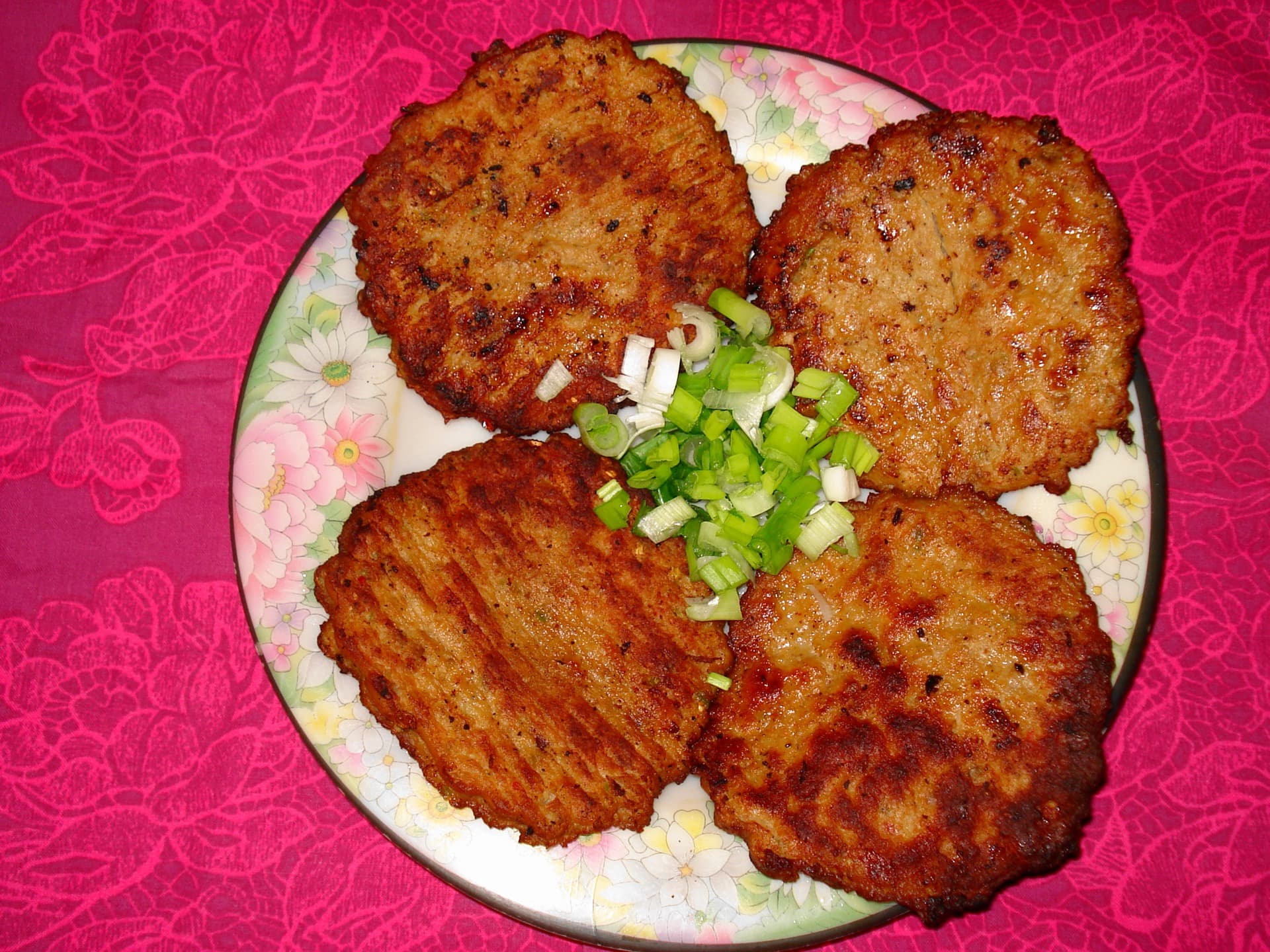
A chapli kabab is a flat, round, shallow fried patty of minced meat, usually beef, distinguished by its large size, its thin shape and its bold, complex seasoning. Unlike the smooth, dense seekh and shami kebabs of the rest of the country, the chapli kabab is coarse, loose textured and generously studded with crushed whole spices, tomato, onion and green chilli, fried on a flat griddle in plenty of fat until the edges turn crisp and lacy. It is typically the size of a saucer or larger, and it is eaten hot off the griddle, torn and wrapped in naan with raw onion and a squeeze of lemon. The combination of crisp fried exterior, juicy spiced meat and the tang of pomegranate and tomato makes it utterly distinctive.
Where does the chapli kabab come from?
The chapli kabab is firmly a creation of the Pashtun belt, born in Khyber Pakhtunkhwa around Peshawar and especially the city of Mardan, which many consider its true home. It belongs to the wider Pashtun and Afghan culinary world that straddles the modern border, so while it is a celebrated Pakistani dish, it is equally at home in eastern Afghanistan, and arguments over its precise origin are really arguments within a single shared Pashtun food culture. The name is usually traced to the Pashto word chaprikh, meaning flat, describing the kebab's distinctive shape, though a popular folk explanation links it to chappal, the flat sandal, a nod to its broad, flat form. Whatever the etymology, the dish has spread from its frontier home to become a beloved street food across all of Pakistan.
What goes into a chapli kabab?
The chapli kabab's flavour comes from a very particular set of ingredients that set it apart from other kebabs. The base is coarsely minced beef, often with a good proportion of fat for juiciness. To this are added chopped tomato, onion and green chilli, fresh coriander, and, crucially, whole and coarsely crushed spices rather than fine powders: above all coriander seeds, which give the kebab its signature crunch and aroma, and dried pomegranate seeds (anardana), which lend a distinctive tang. A beaten egg and a little maize flour (cornmeal) or wheat flour bind the loose mixture and help it crisp up. The use of crushed coriander seed and anardana is the real secret, giving the chapli kabab a flavour profile found in no other Pakistani kebab. The mixture is kept deliberately loose and moist, which is part of why it is shaped flat and fried rather than grilled on skewers.
How it is cooked
The cooking method is as distinctive as the seasoning. The flat patties are shallow fried on a large iron griddle or tawa in plenty of hot fat, traditionally beef tallow or oil, which is repeatedly spooned over the top as they cook. This frying in abundant fat is what gives the chapli kabab its crisp, lacy, golden edges and keeps the inside juicy, and it is why a proper chapli kabab is cooked on a flat surface rather than over open flame like a tikka or seekh. A slice of tomato is often pressed onto the top of each kebab as it fries. Watching them sizzle in rows on a huge griddle at a busy Peshawar or Mardan stall, the cook flipping and basting them in the bubbling fat, is part of the pleasure, and the kebabs are served straight from the griddle at their hot, crisp best.
How chapli kabab is eaten
Chapli kabab is street food at heart, eaten hot and fresh. The classic way is to tear it and wrap it in a piece of soft naan, with raw onion rings, fresh tomato, a squeeze of lemon and perhaps a little chutney or raita, eaten by hand. It is sold from dedicated stalls and small restaurants, often the size of a generous saucer for a modest price, and a couple of kebabs with naan make a satisfying, inexpensive meal. In its home region it is an everyday food, a quick lunch or evening bite, but its reputation has spread so far that it is now found across Pakistan and is a fixture at Pashtun restaurants everywhere. Many travellers rank a fresh chapli kabab among the best things they eat in the country.
Beef, the binding and the variations

While beef is the classic and most common meat, chapli kababs are also made with mutton, and a chicken version exists as a lighter modern alternative, though purists favour the traditional beef. The binding is a point of craft: too little egg and flour and the loose patty falls apart on the griddle, too much and it loses its juicy, crumbly texture, so skilled cooks judge it carefully to hold the kebab together while keeping it tender. The size and spicing vary a little from cook to cook and town to town, with Mardan kebabs often cited as the gold standard, but the essential character, flat, coarse, crisp fried and fragrant with crushed coriander and anardana, remains constant. Some modern versions add cheese or extra chilli, but the traditional recipe needs no improvement.
Where to find the best chapli kabab
The undisputed heartland of the chapli kabab is Khyber Pakhtunkhwa, and the city of Mardan in particular is famous throughout Pakistan for its chapli kababs, with travellers often stopping there specifically to eat them. Peshawar, too, has celebrated chapli kabab spots, especially in and around its old bazaars and meat markets, and the dish features prominently in our Peshawar food guide. Beyond the home region, almost every Pakistani city now has Pashtun run restaurants and stalls serving good chapli kababs, so you do not need to travel to the frontier to try one, though the versions eaten hot off the griddle in Mardan or Peshawar, with the right crushed coriander crunch and anardana tang, remain the benchmark against which all others are judged.
Making chapli kabab at home
Chapli kabab is a popular home dish too, especially in Pashtun households, and it is achievable for home cooks who can source the key ingredients, above all whole coriander seeds and dried pomegranate seeds, which give the authentic flavour. The method is straightforward, mixing the coarse minced beef with chopped vegetables, crushed spices, egg and flour, shaping flat patties and shallow frying them in plenty of fat, but the details matter: keeping the mixture loose, crushing rather than powdering the coriander, getting the fat hot enough to crisp the edges, and basting as they cook. For travellers who fall for the dish, a packet of chapli kabab masala makes a good edible souvenir, though the fresh whole spices are what truly make it. Still, like so much Pakistani food, the very best chapli kababs are the ones cooked by a master at a busy griddle, eaten standing up with naan in the bustle of a frontier bazaar.
More than a kebab: the cultural place of chapli kabab
In its home region, the chapli kabab is not just food but a small point of identity and pride. Pashtuns are deeply attached to it, and a stop for chapli kababs is a natural part of a journey through Khyber Pakhtunkhwa, whether a quick roadside lunch or a planned detour to a famous Mardan stall. The dish travels with the Pashtun diaspora too, and you will find it wherever Pashtun communities settle, a taste of home cooked on a griddle far from the frontier. Its rise from a regional speciality to a dish loved across all of Pakistan mirrors the way the country's food cultures have mingled in its big cities, and few dishes are as instantly recognisable: the moment you see those large flat patties sizzling in a sea of fat on a wide black griddle, studded with tomato and flecked with coriander, you know exactly what you are looking at. That visual drama, the sheer size and the bargain price, is part of why the chapli kabab has become such a beloved symbol of Pashtun hospitality and a favourite of travellers across the country.
What to eat and drink with chapli kabab
The chapli kabab is robust and rich, so its accompaniments are kept simple and fresh. Hot naan is essential, used to wrap and scoop the kebab, and raw onion rings, fresh tomato, green chilli and a squeeze of lemon cut through the fat and lift the flavours. A little yoghurt raita or fresh chutney often comes alongside, and a simple salad rounds out the plate. To drink, in true Pashtun fashion, the kebabs are followed by fragrant green tea, the qahwa or sabz chai that aids digestion after the rich, fried meat, though a glass of cold lassi or a soft drink suits the heat just as well. A couple of chapli kababs, fresh naan, raw onion and a pot of green tea make a complete, satisfying and inexpensive meal, and it is exactly how the dish is enjoyed every day across the frontier, eaten without ceremony but with real pleasure.
Related guides
Read more about its home region in our Peshawar food guide, see the national picture in the Pakistani food guide, and explore the other great dishes in our nihari, biryani and haleem guides. Browse every region on the destinations page.
Last updated
Share this article
Frequently asked questions
- Where did the chapli kabab originate?
- The chapli kabab originated in the Pashtun belt of Khyber Pakhtunkhwa, around Peshawar and especially the city of Mardan, which many consider its true home. It belongs to the shared Pashtun and Afghan food culture that spans the border, and has since spread across all of Pakistan as a beloved street food.
- Is chapli kabab Afghan or Pakistani?
- It is both, in the sense that it belongs to the Pashtun culinary world that straddles the Pakistan and Afghanistan border. It is a celebrated Pakistani dish, especially of Khyber Pakhtunkhwa, and equally at home in eastern Afghanistan, so disputes over its origin are really within a single shared Pashtun food tradition.
- What is chapli kabab made of?
- Chapli kabab is made of coarsely minced beef mixed with chopped tomato, onion, green chilli and fresh coriander, seasoned with crushed whole coriander seeds and dried pomegranate seeds (anardana), and bound with egg and a little maize or wheat flour. It is shaped flat and shallow fried in plenty of fat until crisp.
- What is the binding agent in chapli kabab?
- A beaten egg and a small amount of maize flour (cornmeal) or wheat flour are used to bind the deliberately loose, moist mixture so the flat patties hold together on the griddle without becoming dense. Getting this balance right keeps the kebab juicy and crumbly while still intact.
- Why is chapli kabab flat?
- The name comes from the Pashto word chaprikh, meaning flat, describing its shape, and the flat form suits its loose, moist mixture, which is shallow fried on a griddle rather than skewered and grilled. The broad, thin shape also maximises the crisp, lacy fried edges that are part of the kebab's appeal.
- Where can you find the best chapli kabab?
- Mardan in Khyber Pakhtunkhwa is famous throughout Pakistan as the home of the best chapli kababs, with Peshawar also celebrated for them, especially around its old bazaars. Pashtun run restaurants across the country now serve good versions, but the ones eaten fresh off the griddle in the frontier heartland remain the benchmark.