Photo by Maria Ly, via Wikimedia Commons (CC BY 2.0)Website
Fairy Meadows is the most famous viewpoint in Pakistan, a rolling green alpine meadow at 3,300 metres that sits directly beneath the colossal Rakhiot face of Nanga Parbat, the ninth highest mountain on earth. Waking up in a wooden cabin with the "Killer Mountain" filling the sky is one of the great experiences of travel anywhere, and reaching it is an adventure in itself, involving one of the world's most notorious jeep roads and a short mountain hike. This guide covers exactly how to get to Fairy Meadows, the trek up, the onward walk to Nanga Parbat Base Camp, how hard it all is, the best time to go, where to stay, what it costs, and a simple plan to tie it together.
Fairy Meadows at a glance
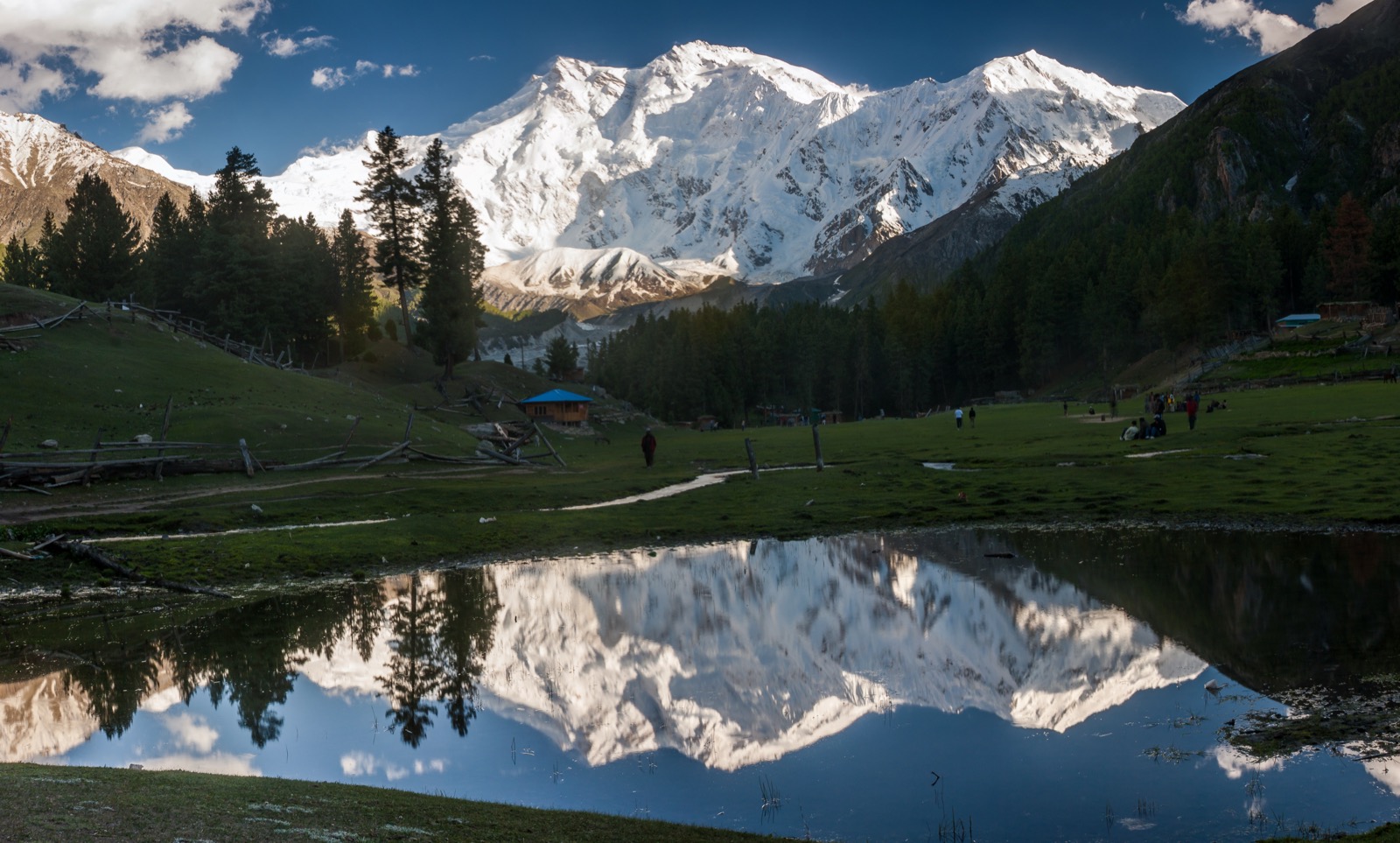
- Where: Gilgit-Baltistan, above the Raikot bridge on the Karakoram Highway, beneath Nanga Parbat.
- Elevation: about 3,300 metres at the meadow.
- Getting there: a jeep up the Raikot road to Tato village, then a 5 km hike.
- Famous for: the head on view of Nanga Parbat (8,126 metres) and the base camp trek.
- Best time: May to September, with the shoulder months quieter.
How to get to Fairy Meadows
Reaching Fairy Meadows is a three stage journey, and each stage matters.
Stage one: to the Raikot bridge. The trailhead road begins at the Raikot bridge on the Karakoram Highway, about 80 km from Gilgit and roughly 400 km from Islamabad. From either Gilgit or Chilas it is around a two hour drive to the bridge.
Stage two: the Raikot jeep road. From the bridge, local four wheel drive jeeps grind up a narrow, unpaved mountain track to Tato village, a journey of about two hours. A jeep costs in the region of 8,000 to 8,500 rupees for the round trip and is shared among up to four or five passengers, so the per person cost is modest if you fill it. This road is famous, and infamous: it clings to the mountainside with sheer drops of up to 1,000 metres and no barriers, and it is regularly listed among the most dangerous roads in the world. The experienced local drivers navigate it daily and only they are permitted to drive it, so sit back, trust them, and enjoy the view if your nerves allow.
Stage three: the hike. From the road end near Tato village it is a walk of about 5 km and 700 metres of ascent to the meadow, taking roughly two to three hours at a gentle pace. Porters and horses are available to carry bags or riders for those who want them. The path climbs through pine forest before opening suddenly onto the meadow with Nanga Parbat ahead.
How difficult is the trek?
The walk up to Fairy Meadows itself is not technical and needs no mountaineering experience. It is a steady uphill forest path, manageable for beginners and reasonably fit older walkers, with the option of a horse if the climb is too much. The altitude of 3,300 metres is enough to leave you a little breathless but not dangerous for most people. The onward treks to Beyal camp and Nanga Parbat Base Camp are longer and tougher, but Fairy Meadows on its own is one of the most accessible high alpine destinations in Pakistan, which is a big part of its appeal.
Nanga Parbat and the base camp trek
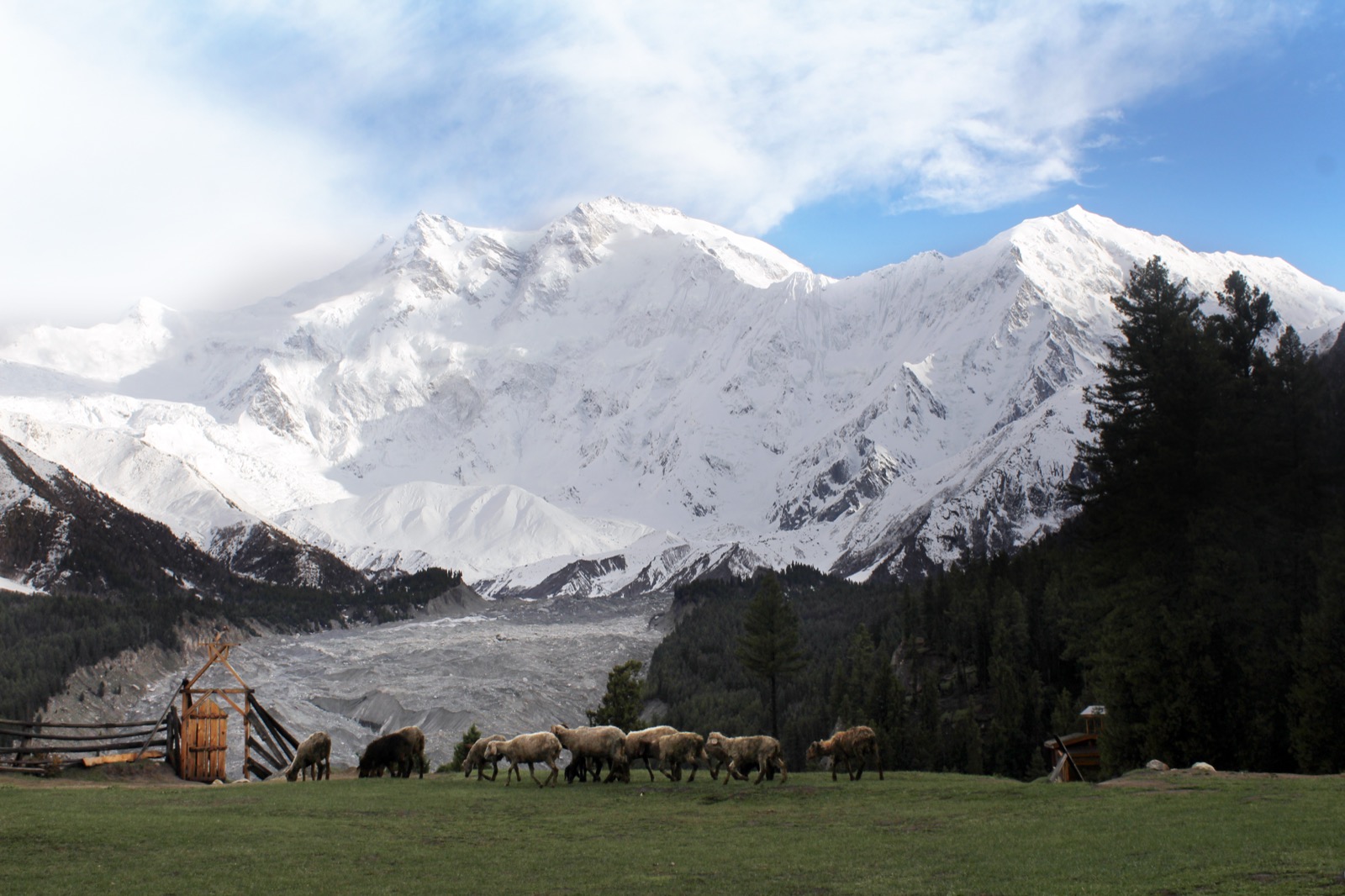
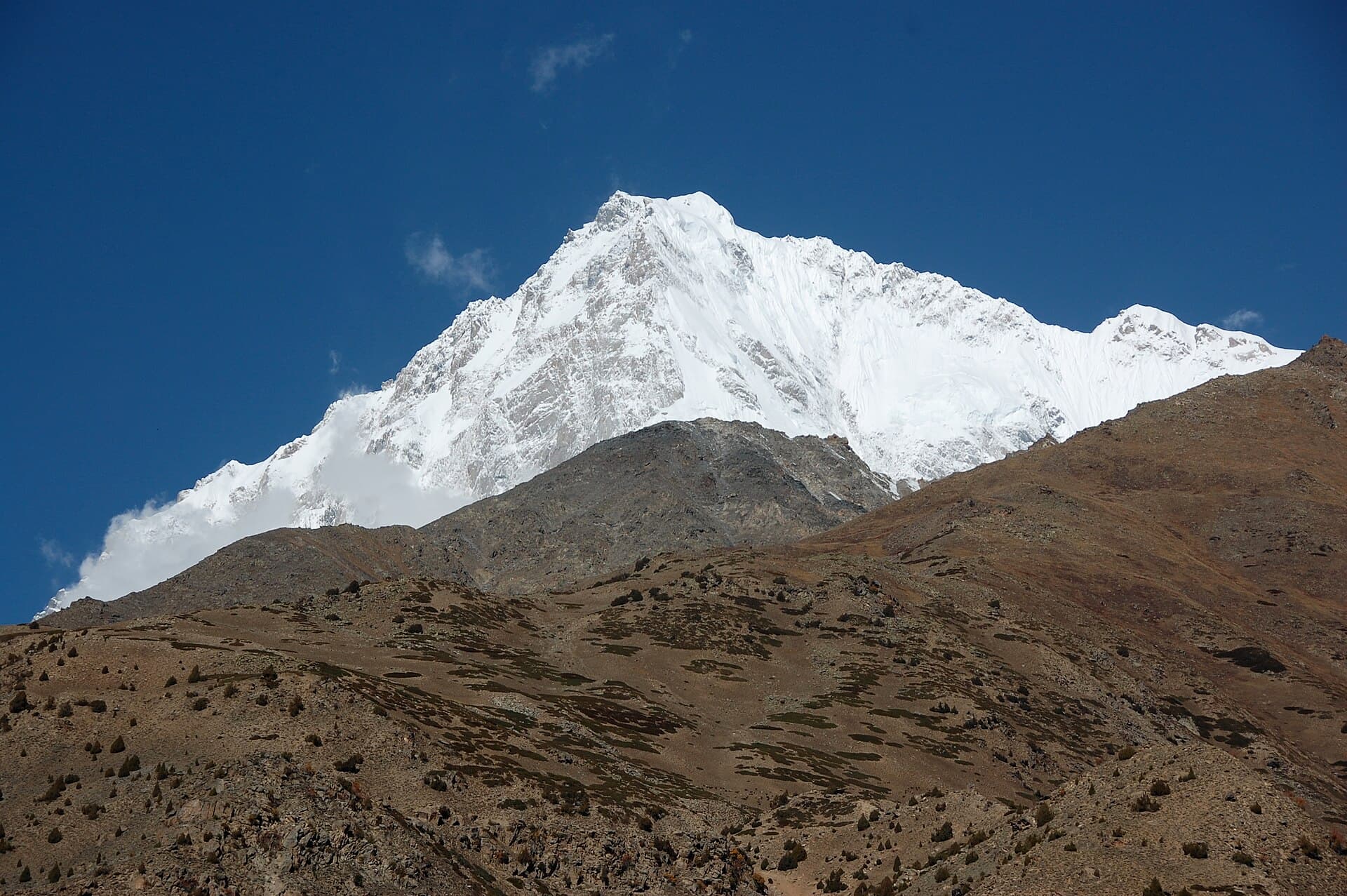
Yes, you can see Nanga Parbat from Fairy Meadows, and that is the entire point: the meadow faces the mountain's vast Rakhiot face square on, so the peak dominates the view from the moment you arrive. Nanga Parbat stands 8,126 metres high, the ninth highest mountain in the world and the second highest in Pakistan, and its grim climbing history earned it the nickname the Killer Mountain.
For those who want to get closer, two onward walks reward the effort:
- Fairy Meadows to Beyal Camp, a gentle few kilometres taking under two hours, a perfect half day stroll to a higher meadow with even bigger views.
- Fairy Meadows to Nanga Parbat Base Camp, roughly 9 km one way with around 700 metres of gain, a full day out and back of about five to eight hours, or about four hours one way from Beyal. The viewpoint near base camp brings you face to face with the glacier and the mountain wall, an unforgettable finale.
Start the base camp walk early, carry water and warm layers, and turn back in good time, as the weather can change fast at altitude.
Best time to visit Fairy Meadows
The season runs from roughly May to September. July and August are the peak, with the warmest weather, the most reliable conditions and the biggest crowds. The shoulder months, May and September into October, are quieter and beautiful, though early and late in the season you risk cold and lingering or fresh snow. April is possible but cold with real snow risk, and by late October the cabins begin to close for winter. For the best balance of good weather and fewer people, aim for June or September.
Where to stay and what it costs
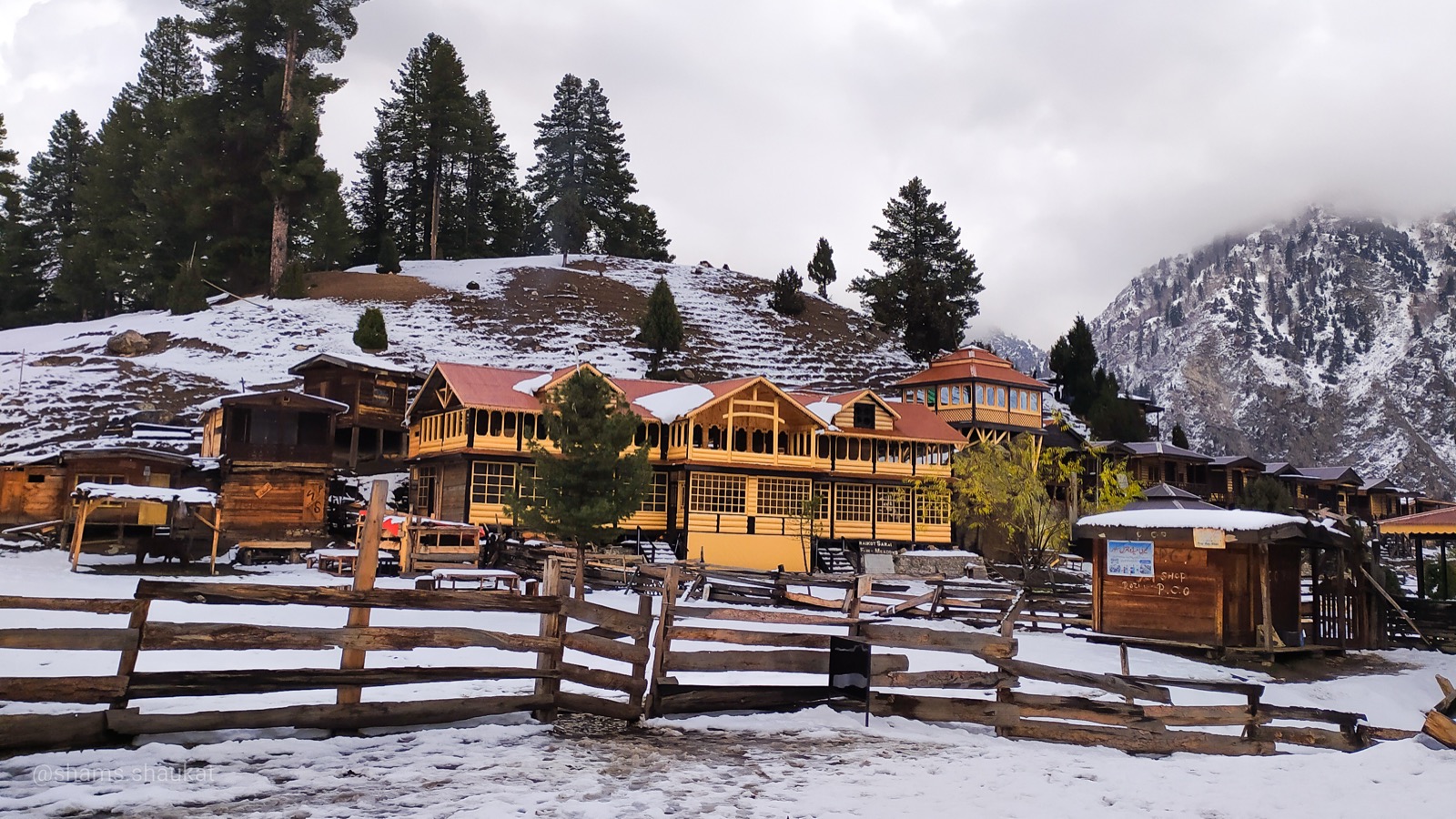
Accommodation on the meadow is simple, rustic and part of the charm, ranging from tents to wooden cabins.
- Tent with sleeping bag: around 500 rupees per night.
- Basic bungalow or cabin: roughly 1,000 to 3,000 rupees per night, with options like the Greenland Hotel around 2,000.
- Premium cabins (Raikot Serai and similar): around 7,000 rupees per night.
- Meals: about 350 to 500 rupees for simple dal, rice and bread.
- Bottled water: around 150 rupees.
Add the jeep at roughly 8,000 to 8,500 rupees per vehicle return, shared among the group, plus an optional tip for the police escort of around 500 rupees, and Fairy Meadows is a genuinely affordable trip. For a fuller budget picture across the north, see our Pakistan trip cost guide.
Food and supplies
The cabins and a few small cafes on the meadow serve hearty, simple food: dal, rice, eggs, fresh bread, barbecued meat and endless tea. Prices are a little higher than in the towns below because everything is carried up by jeep and porter, but they remain reasonable. Bring any special snacks, and carry cash for everything, as there are no card machines and prices are paid on the spot. There is no reliable electricity or mobile signal, so charge devices beforehand and treat the lack of connectivity as part of the escape.
A simple two to three day plan
- Day 1: Drive to the Raikot bridge, take the jeep up to Tato, and hike to Fairy Meadows. Settle into a cabin and watch the sunset light on Nanga Parbat.
- Day 2: A full day at altitude. Walk out to Beyal camp in the morning, then push on toward Nanga Parbat Base Camp for those who are fit, returning to the meadow for a second night.
- Day 3: A final sunrise on the mountain, then the hike down to Tato, the jeep to the Raikot bridge, and onward to Gilgit, Hunza or Chilas.
Practical tips
- Trust the jeep drivers: the Raikot road is dangerous but the licensed local drivers know it intimately; only they may drive it.
- Pack warm layers: even in summer the nights at 3,300 metres are cold.
- Carry cash: there are no card machines on the meadow.
- Bring a power bank: electricity and signal are unreliable to absent.
- Take the altitude gently: walk at a steady pace and hydrate, especially on the base camp day.
- Start base camp early: the full day walk needs an early start and a sensible turnaround time.
- Hire a porter or horse if needed: there is no shame in lightening the load on the climb up.
The Killer Mountain: a little history
Nanga Parbat's grim nickname is earned. The name means "Naked Mountain", and its towering Rakhiot face, the very wall you gaze at from Fairy Meadows, has one of the deadliest histories in mountaineering. Early attempts in the 1930s ended in disaster, with climbers and porters lost to storms and avalanches on these slopes, and the peak claimed many lives before it was finally summited in 1953 by the Austrian climber Hermann Buhl, who reached the top alone in an extraordinary feat of endurance. For decades the mountain resisted a winter ascent, becoming one of the last great prizes in Himalayan climbing until it was finally conquered in winter in 2016. Standing on the gentle green meadow with that brutal history rising in front of you is part of what makes Fairy Meadows so moving: it is one of the very few places where an ordinary traveller, with no climbing skill at all, can sit in safety and comfort beneath one of the most formidable mountains on the planet.
Where Fairy Meadows fits in your trip
Fairy Meadows is not a destination you visit on its own from the cities; it is a highlight you fold into a wider northern journey. Because the Raikot bridge sits on the Karakoram Highway between Chilas and Gilgit, it slots naturally into the drive up to Hunza or the loop out to Skardu. A common and rewarding pattern is to break the long Islamabad to Hunza road trip with two nights at Fairy Meadows, then continue north to Hunza and the Khunjerab Pass, or east to Gilgit and Skardu, so the meadow becomes the wild, high heart of a bigger trip rather than a stand alone trek. Allow at least two nights on the meadow itself: a single night barely lets you arrive, and the magic is in waking to the mountain at dawn and having a full day for Beyal camp or base camp. Travellers who try to squeeze it into a rushed overnight almost always wish they had stayed longer, both for the views and to let the body adjust gently to the altitude before walking higher.
Related guides
Time your trek with our best time to visit Pakistan guide, budget with the Pakistan trip cost breakdown, base yourself nearby with the Gilgit travel guide, and build the wider route with the northern Pakistan itinerary. Browse every region on the destinations page. See also our Fairy Meadows vs Hunza guide.
Last updated
Share this article
Frequently asked questions
- How many days do you need for Fairy Meadows?
- At least two nights: one to make the jeep ride and forest walk in and rest, and one to trek to Beyal Camp and the Nanga Parbat viewpoint. A single night wastes the long journey to get there. Three nights is ideal if you want to reach base camp unhurried.
- How much does a Fairy Meadows trip cost?
- A realistic total is PKR 20,000 to 35,000 per person for two nights, covering the jeep, lodging, food and a buffer. The fixed jeep fare of PKR 16,000 to 22,000 is per vehicle for 5 to 6 people, so sharing it cuts the per-head cost sharply. Camping is cheapest, cabins cost more.
- Is the Fairy Meadows jeep road safe?
- The Raikot Bridge to Tato track is a narrow single-lane road cut into a cliff and is frequently called one of the world's most dangerous, but experienced local drivers run it daily and serious incidents are rare. Sit on the left for the views, and trust the driver over your nerves.
- How hard is the trek to Nanga Parbat Base Camp?
- It is one of the easier base-camp treks in Pakistan. From Fairy Meadows it is about 2 hours to Beyal Camp and a 3 to 4 hour round trip onward toward the viewpoint, mostly gentle gradient. The altitude is the main challenge, not the difficulty, so start early and pace yourself.
- What is the best time to visit Fairy Meadows?
- May to October. Late spring and autumn are quietest with the clearest air, June to August is peak domestic season and crowded, and winter is very hard with deep snow and most cabins closed. Avoid Eid weekends if you want the meadow calm.
- Can you see Nanga Parbat from Fairy Meadows?
- Yes, directly. Fairy Meadows sits at the foot of the Raikot face of Nanga Parbat, the world's ninth-highest mountain at 8,126 metres, and the peak fills the skyline from the meadow. The base-camp trek brings you even closer to the glacier and ice.