Photo by Muhammad AsharWebsite
Islamabad is Pakistan's calm, green capital and the gateway to almost every great northern journey. Purpose built in the 1960s on a tidy grid against the backdrop of the Margalla Hills, it is leafy, orderly and easy to navigate, with the country's main international airport, the start of the Karakoram Highway, and the flights to Gilgit and Skardu all on its doorstep. Most travellers pass through on the way to the mountains, but the city itself rewards a day or two with grand modern landmarks, real hill hikes minutes from the centre, historic villages and excellent food. This guide covers the top things to do in Islamabad, how to get there and around, the best time to visit, where to stay, the best day trips, and how to use the capital as your launch pad for the north.
Islamabad at a glance
- Where: the federal capital, at the foot of the Margalla Hills in the country's north.
- Layout: a planned grid of lettered and numbered sectors, easy to navigate.
- Role: the main gateway to northern Pakistan, with the international airport and the Karakoram Highway.
- Famous for: the Faisal Mosque, the Margalla Hills, the Pakistan Monument and its green, orderly calm.
- Best time: spring (March to May) and autumn (September to November).
How to get to Islamabad and around
Getting there. Islamabad International Airport is the country's principal gateway, with long haul and regional flights, and the city is also well connected by motorway to Lahore (about four hours) and Peshawar, and by air and road to the north. The domestic flights to Gilgit and Skardu leave from here, as do the buses and private vehicles up the Karakoram Highway.
Getting around. The grid layout makes the city simple to navigate, with each sector lettered and numbered. Ride hailing apps such as Uber and Careem work well and are the easiest way to move around, alongside metered taxis. The metro bus links Islamabad with its twin city Rawalpindi. For the Margalla Hills and day trips you will want a car or a booked driver.
Top things to do in Islamabad
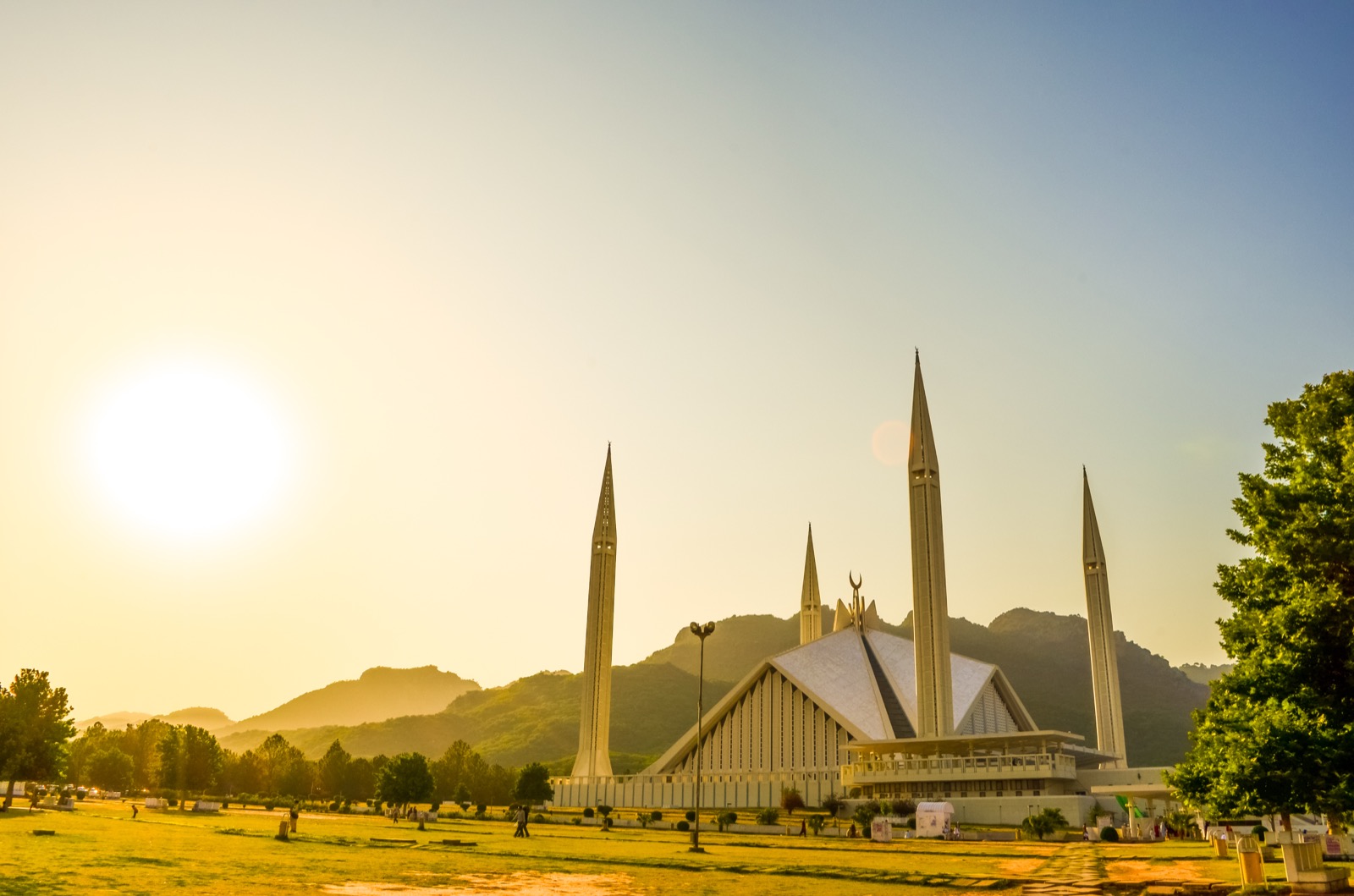
- Faisal Mosque, the city's icon and one of the largest mosques in the world, with a striking modern tent like design completed in 1986, set against the Margalla Hills. It is most beautiful at sunset around the evening call to prayer. Dress modestly: long trousers, covered shoulders, and a scarf for women.
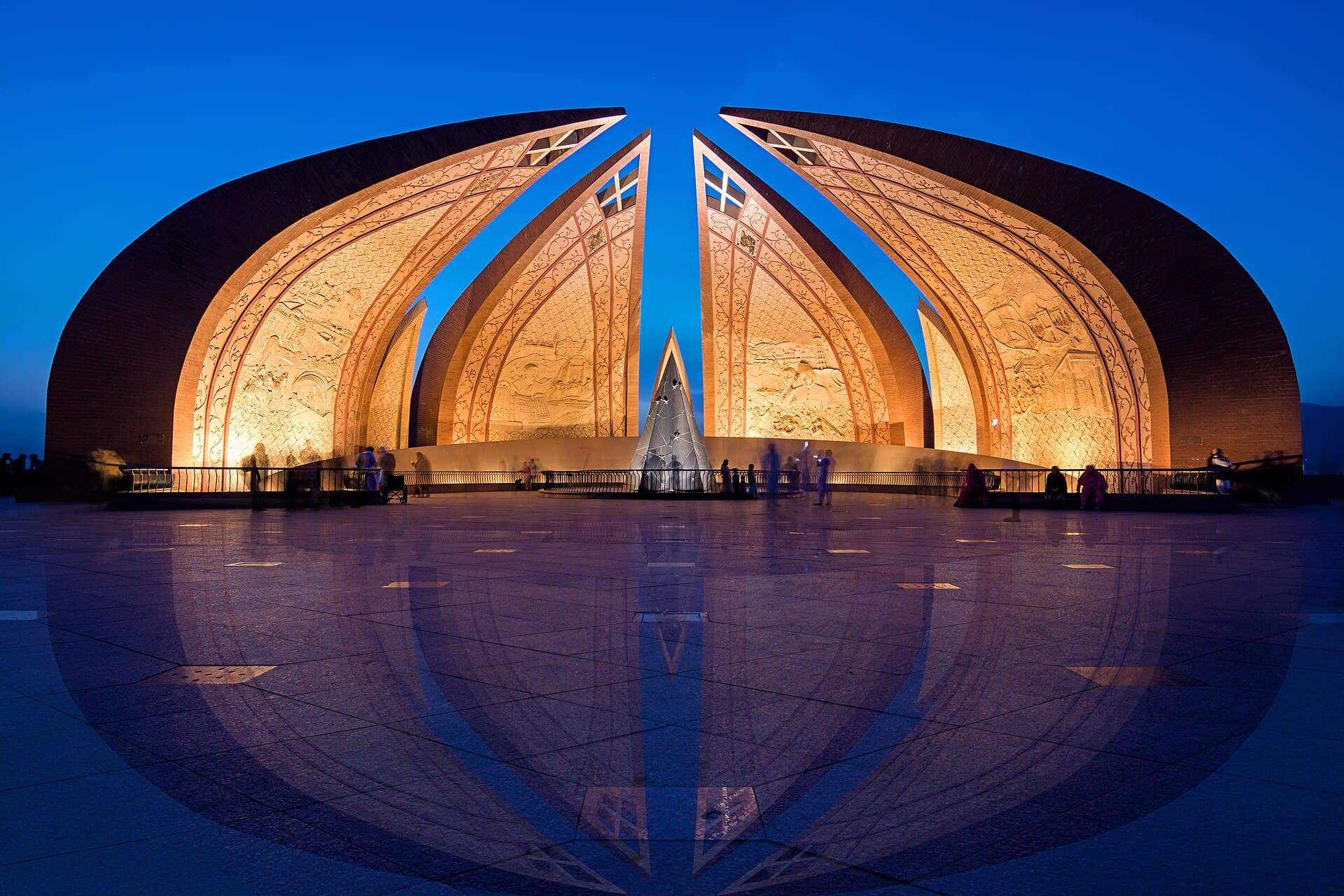
- Pakistan Monument, a giant stone flower in Shakarparian Park whose four large petals represent the provinces, with panoramic city views and an adjoining museum that runs from the Indus Valley civilisation to modern Pakistan.
- Daman-e-Koh, the classic viewpoint partway up the Margalla Hills, looking out over the whole city and the Faisal Mosque below.
- Pir Sohawa and the Monal, higher up the hills, where the famous Monal restaurant serves kebabs with a sweeping view over the lights of the capital.
- Saidpur Village, a historic settlement at the foot of the hills with a Hindu temple, a Sikh gurdwara and a mosque side by side, plus cafes in restored stone houses, lovely in the late afternoon.
- Lok Virsa Museum, the national ethnographic museum of crafts and culture, with an entry fee of around 500 rupees.
- Rawal Lake, a reservoir with lakeside walks and viewpoints on the edge of the city.
- Shah Allah Ditta caves, ancient Buddhist meditation caves on the city's western edge, a quiet, atmospheric corner.
- Fatima Jinnah Park (F-9), the city's largest green space, good for a stroll or a picnic.
Hiking the Margalla Hills
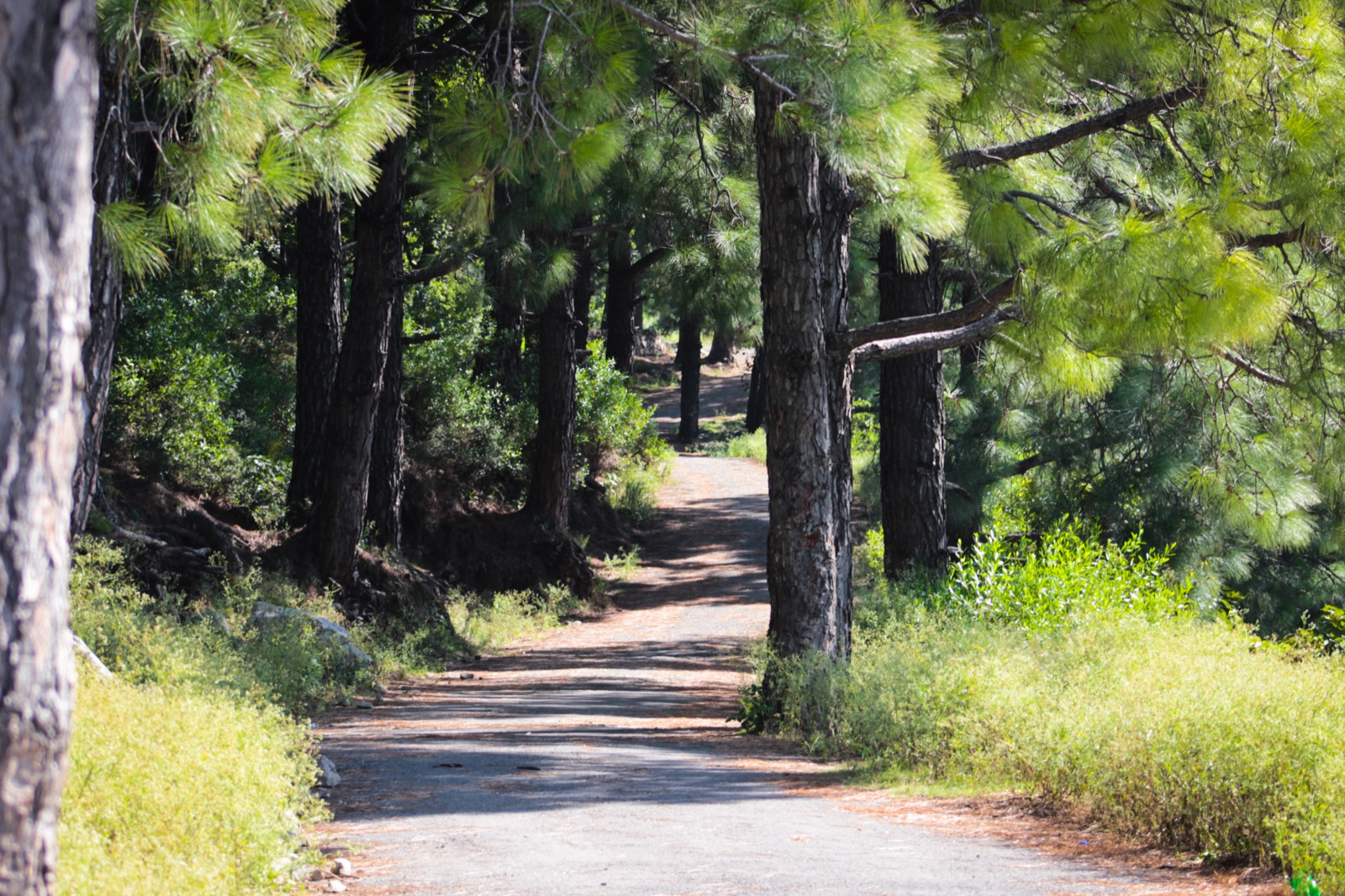
One of Islamabad's best features is that you can be on a real mountain trail within fifteen minutes of the centre. The Margalla Hills National Park rises straight out of the city's northern edge, threaded with numbered trails.
- Trail 3 is the most popular, a steep, rewarding climb of about one to one and a half hours that locals use as a morning workout, ending at a viewpoint cafe.
- Trail 5 is longer and quieter, passing seasonal streams, a gentler way up.
- Trail 6 runs behind the Faisal Mosque and loops through the village of Jabri.
- Trails 2 and 4 are less maintained, for those wanting solitude.
Start early in the warmer months, carry water, and watch for monkeys along the way. The hills are home to wildlife including the occasional leopard, and the views over the city from the top are the reward.
Viewpoints, food and markets
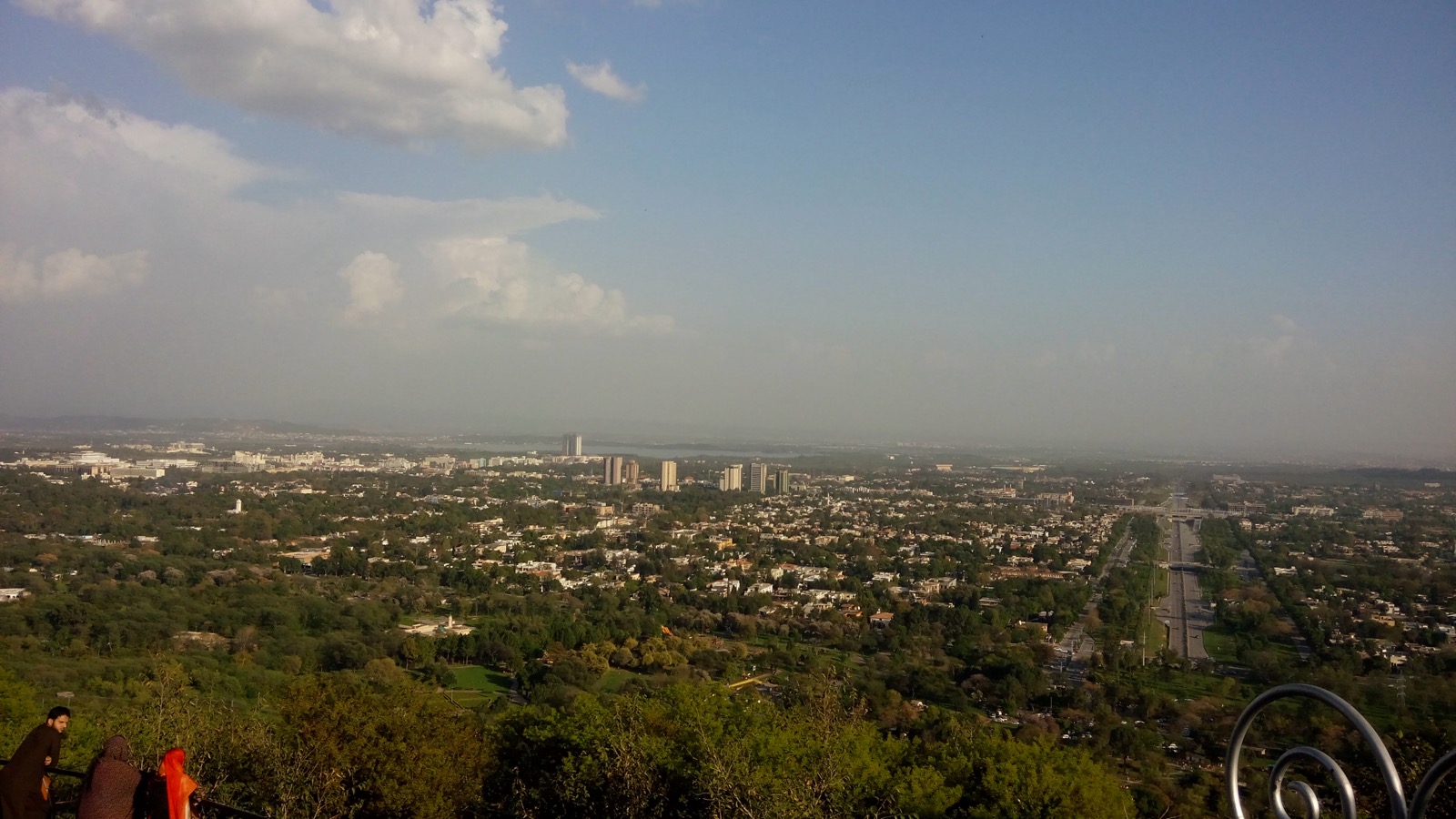
Islamabad eats very well. The hillside restaurants at Pir Sohawa, the Monal above all, pair good food with the best views in the city. In the sectors below, Kohsar Market is a popular food hall, the F-7 district has well known spots like the Kabul restaurant for Pathan cuisine, and the Centaurus Mall is the big modern shopping and dining complex. For a more traditional, chaotic shopping experience, head to the Raja Bazaar in neighbouring Rawalpindi, where haggling is expected and the pre Partition streets are full of life. Across the city you will find everything from street food to international dining, generally at gentler prices than a Western capital.
Best time to visit Islamabad
Islamabad is at its best in spring, March to May, when the city's famous flowering trees bloom and the weather is mild, and in autumn, September to November, with clear, comfortable days. Summer, June to August, is hot and humid with monsoon rain, though the hills offer some relief and the rain keeps everything green. Winter, December to February, is cool and crisp, occasionally cold enough for a rare dusting of snow on the Margallas, and pleasant for sightseeing if you pack a jacket. The shoulder seasons are also the best launch windows for onward travel to the mountains.
Where to stay
The most convenient areas to base yourself are the central sectors around F-6, F-7 and the Blue Area, close to the restaurants, markets and the hills, with options from budget guesthouses to international five star hotels such as the Serena and the Marriott. For a quieter, greener stay, the sectors nearer the Margallas put the trails on your doorstep. Because many travellers use Islamabad as a one or two night stop before flying or driving north, a comfortable mid range hotel in a central sector is usually the practical choice.
The best day trips from Islamabad
The capital is a superb base for day trips, with something for every interest within a couple of hours.
- Taxila, around a 45 minute drive, a UNESCO World Heritage site and one of the great centres of the ancient Gandhara civilisation, with Buddhist stupas, monasteries and a fine museum.
- Khanpur Dam, about an hour away, a turquoise reservoir ringed by rocky hills and the city's favourite adventure spot, with jet skis, kayaking and cliff diving.
- Rohtas Fort, a vast sixteenth century fortress, one of the largest on the subcontinent, a stirring half day out.
- Katas Raj, a historic Hindu temple complex around a sacred pond, deeper into Punjab.
- Simly Dam, about an hour out, a calm lake among green hills for fishing and quiet.
- Murree and the Galiyat, the nearest hill stations, an easy day or overnight escape into the pines, covered in our Murree and Galiyat guide.
- Rawalpindi, the bustling twin city, for the Raja Bazaar and a more traditional, older urban feel.
Islamabad for families and couples
Islamabad suits both. Families love Fatima Jinnah Park, Rawal Lake, the Lok Virsa museum and the easy Margalla viewpoints, plus the adventure of Khanpur Dam as a day out. Couples gravitate to sunset at the Monal, the Faisal Mosque at dusk, the cafes of Saidpur Village and quiet walks in the hills. The city's calm, green and safe character makes it one of the easiest places in Pakistan to spend relaxed time, whatever your group.
Using Islamabad as your gateway north
For most visitors, Islamabad's greatest role is as the launch pad for the mountains. The Karakoram Highway begins its long climb from here toward Gilgit, Hunza and the Chinese border, and the short, scenic flights to Gilgit and Skardu leave from the city's airport. A common pattern is to fly in, spend a day acclimatising and seeing the capital, stock up on anything you need, then head north by air or road. Coming back, a final night in Islamabad before your international flight is a comfortable way to end a trip. Plan the onward route with our northern Pakistan itinerary and the Gilgit travel guide.
A simple one to two day plan
- Day 1: Start with the Faisal Mosque, then drive up to Daman-e-Koh and Pir Sohawa for the views, lunch at the Monal, and finish at the Pakistan Monument and museum at sunset.
- Day 2: A morning hike on Margalla Trail 3 or 5, then Saidpur Village for lunch and the Lok Virsa museum, with an evening at Kohsar Market or the Centaurus.
- Extra day: A day trip to Taxila for the Gandhara ruins or to Khanpur Dam for water sports.
Practical tips
- Use ride hailing apps: Uber and Careem are cheap, easy and the simplest way around the grid.
- Dress modestly at the mosque: covered shoulders and legs, and a scarf for women.
- Hike early: beat the heat on the Margalla trails and carry water.
- Base centrally: F-6, F-7 and the Blue Area put you near food, markets and the hills.
- Use the city to stock up: it has the best shops and services before you head into the mountains.
- Allow a buffer day for flights north: the Gilgit and Skardu flights are weather dependent and often delayed.
Related guides
Escape to the nearest hills with our Murree and Galiyat guide, plan timing with best time to visit Pakistan, budget with the Pakistan trip cost guide, and build the onward route with the northern Pakistan itinerary. Browse every region on the destinations page.
Last updated
Share this article
Frequently asked questions
- How many days do you need in Islamabad?
- One to two days is enough to see the highlights: the Faisal Mosque, the Pakistan Monument, the Daman-e-Koh viewpoint and a Margalla Hills trail, with time for Saidpur Village or a market. Most travellers then move north.
- How do you get from Islamabad to Hunza and the north?
- By road on the Karakoram Highway, Gilgit is 13 to 16 hours and Hunza 17 to 18 hours, with NATCO and Faisal Movers buses leaving Rawalpindi from about PKR 2,200. In summer the shorter Naran and Babusar route is an option. You can also fly to Gilgit or Skardu in under an hour, weather permitting.
- Is Islamabad safe for tourists?
- Yes. Islamabad is widely regarded as the safest and most relaxed major city in Pakistan, with good roads and a visible police presence. Standard city precautions are enough.
- What is the best time to visit Islamabad?
- Spring, from March to May, and autumn, in October and November, are the most pleasant. Summers are hot, July and August bring monsoon rain, and winters are cool and sometimes foggy.
- Do you need to visit Rawalpindi too?
- Rawalpindi is the older twin city right next door and the main transport hub, so most travellers pass through it for buses north. The Raja Bazaar and Saddar areas are worth a short visit for a complete contrast to planned Islamabad.
- Is the Faisal Mosque free to visit?
- Yes, entry is free. Dress modestly, remove your shoes before entering the prayer hall, and women should carry a headscarf. Early morning and the hour after Asr prayer are the calmest times.