Photo by Ghezwan274Website
If spring dresses Hunza in delicate blossom, autumn sets it on fire. For a few weeks each October the valley's poplars turn brilliant gold, the apricot and apple orchards flush red and orange, and maize and apricots dry on the flat rooftops of the old stone villages, all beneath the first fresh snow on the Karakoram peaks. Autumn in Hunza is, for many seasoned travellers, the single most beautiful time to visit anywhere in Pakistan. This guide covers when the autumn colours peak, where to see them, the October weather, how to get there, where to stay and how to plan a trip around the season.
When is autumn in Hunza?
The autumn colours build from late September and peak in October, before fading through November as the leaves drop and winter closes in.
- Late September to early October: the first turning, with greens giving way to yellow and the harvest under way.
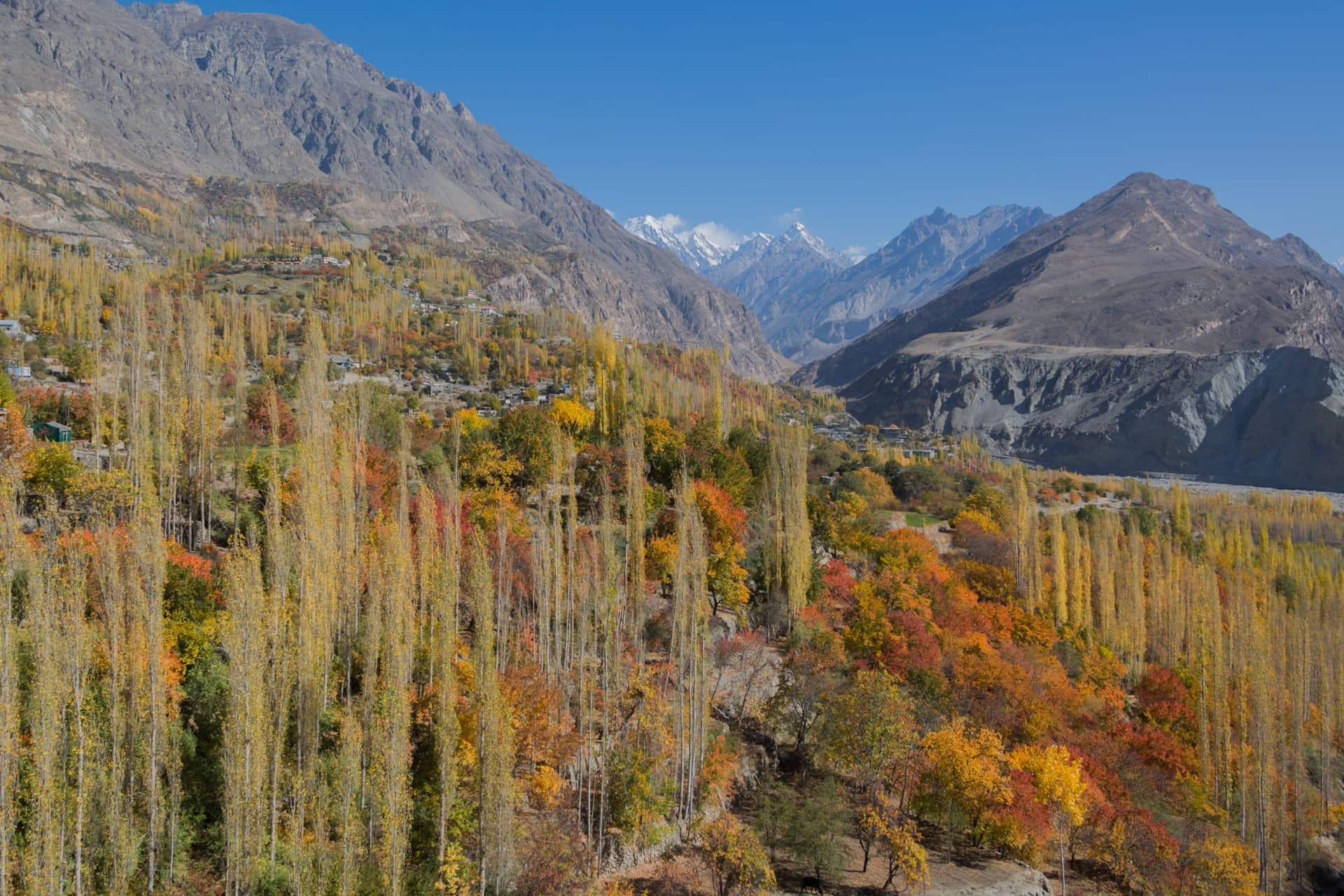
- Mid to late October: the peak, when the poplars blaze gold, the orchards glow red and orange, and the contrast with the snow dusted peaks is at its most spectacular.
- November: late autumn, colder and barer as the leaves fall, quieter still, with the valley settling toward winter.
As in spring, altitude matters: lower Hunza and the main valley colour first, while the timing shifts a little each year with the weather, so allow a window of several days rather than fixing on one date.
What you see in a Hunza autumn
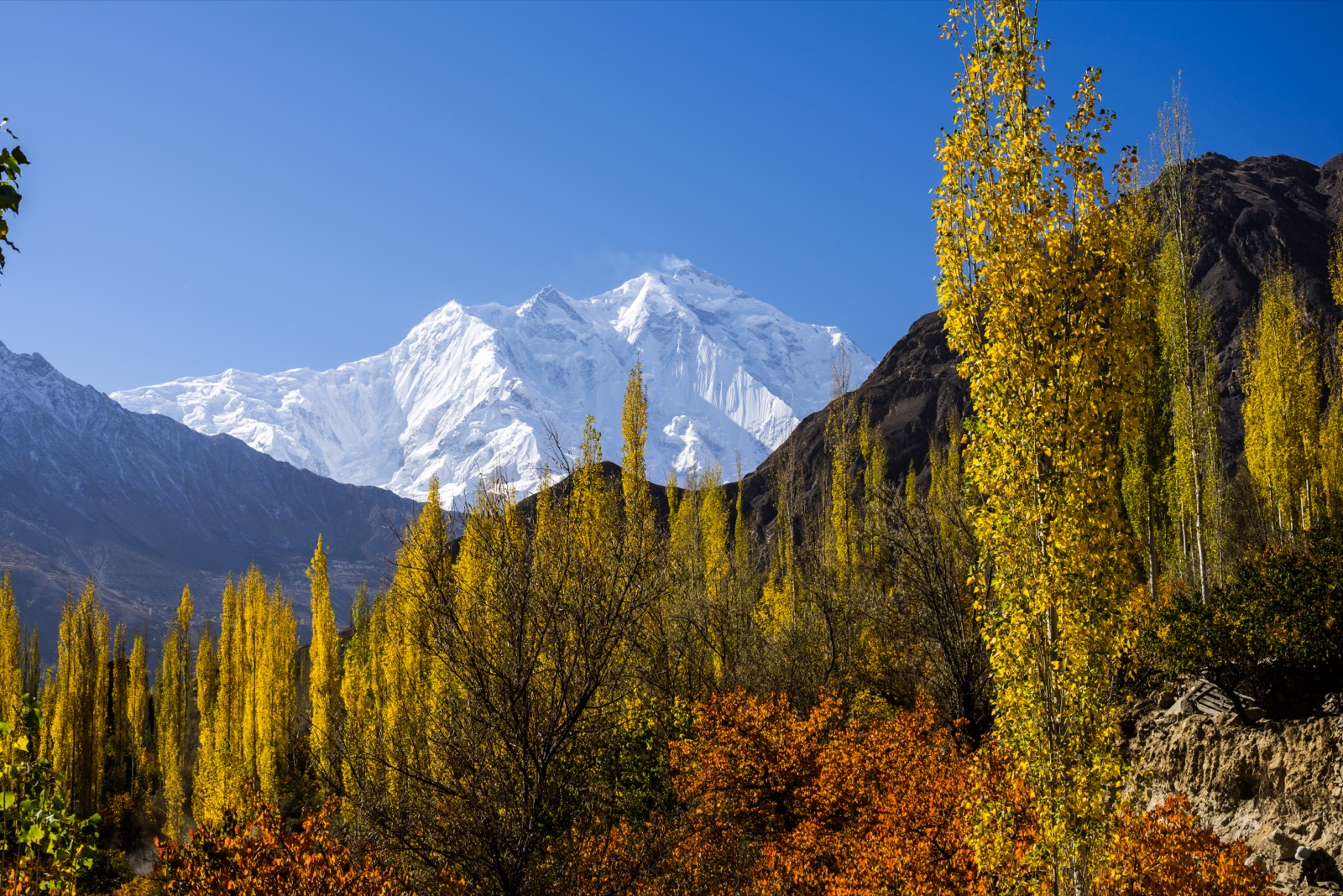
The Hunza autumn is a feast of colour and harvest. The tall Lombardy poplars that line the fields and irrigation channels turn pure gold, the fruit orchards that bloomed in spring now flush deep red, orange and bronze, and the terraced fields fade to amber. Everywhere you see the rhythm of harvest: apricots and apples gathered, maize cobs and apricots laid out to dry on rooftops for winter, and the last of the crops brought in. Above it all, the great peaks of Rakaposhi, Ultar and the Passu Cones often carry their first fresh snow, so you get autumn gold below and winter white above in a single view. It is this layering of warm colour, harvest life and cold mountain that makes the season so photogenic and so moving.
The best places to see autumn colour
- Karimabad, beneath Baltit Fort, where golden poplars frame the old town and the terraced fields glow.
- Duikar and Eagle's Nest, the high viewpoint above Karimabad, for the widest panorama of the autumn valley, unbeatable at sunrise and sunset.
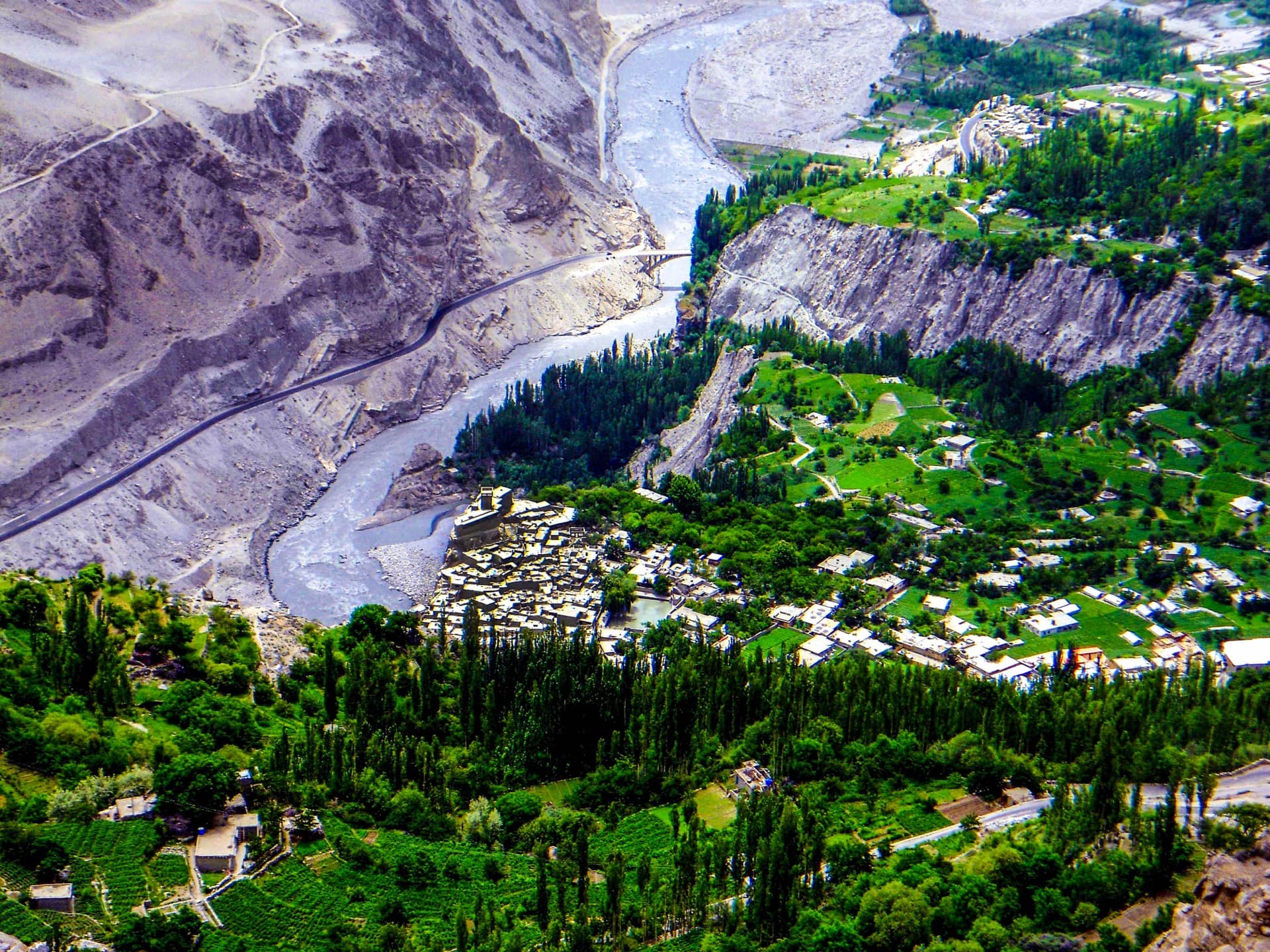
- Altit Fort and village, with its orchards and the old settlement in full autumn colour.
- Nagar valley, across the river, for warm colour against glacier and snow.
- Upper Hunza around Gulmit, Ghulkin and Passu, where the poplars blaze beneath the dramatic Passu Cones.
- Attabad Lake, its turquoise water set off by the surrounding autumn slopes.
- Hopar valley in Nagar, for the glacier views ringed by autumn hues.
October weather in Hunza
October is one of the most pleasant months in Hunza. Days are mild and usually clear, typically around 10 to 18 degrees, perfect for walking and photography in soft, golden light, while nights turn cold and can drop near or below freezing, especially in upper Hunza. By November the cold deepens noticeably and the first heavy snows can arrive. The clear, stable weather of October, combined with the colour, is a big part of why it is such a rewarding month. Pack warm layers for the evenings and a good jacket, even though the days feel crisp and bright.
How to get to Hunza in autumn
By air. Fly from Islamabad to Gilgit, about an hour, then drive two to three hours up the Karakoram Highway to Hunza. The flight is weather dependent, so keep a road backup, though autumn skies are often clearer than spring.
By road. Drive the Karakoram Highway from Islamabad, roughly 14 to 18 hours, usually broken over two days at Chilas or Besham. The journey itself is glorious in autumn as the lower valleys colour up. See our Hunza travel guide and Hunza trip cost guides for the full picture.
Where to stay
Autumn is quieter than the summer peak, so you have good choice of accommodation. Stay in or around Karimabad to be in the heart of central Hunza's colour, with luxury options like Luxus Hunza and the Serena, comfortable mid range hotels, and friendly family run guesthouses. A night at Eagle's Nest in Duikar is especially worthwhile in autumn for the sunrise and sunset panoramas over the golden valley. Book ahead for the October peak, which has become popular, even though the valley overall is calmer than summer.
Spring blossom or autumn colour?
Hunza's two great seasons are often compared. Spring, from mid March to late April, brings delicate pink and white fruit blossom and the valley waking up. Autumn, peaking in October, brings fiery gold, red and orange and the abundance of harvest. Both are quieter and arguably more beautiful than the busy green summer, with clear light and fewer crowds. Choose spring for soft renewal and blossom, autumn for rich colour and harvest, and if you can, see both at least once. We cover the other side of the year in our cherry blossom in Hunza guide. The one shared caveat is that the highest passes such as Khunjerab may be snow affected at the edges of both seasons, so plan around the valley itself.
A 3 to 4 day autumn itinerary
A short trip captures the season beautifully. On day one, fly to Gilgit and drive up to Karimabad, settling in among the golden orchards beneath Baltit Fort. On day two, explore Karimabad, Altit Fort and the village on foot, then head to Duikar for sunset and stay for sunrise over the autumn valley. On day three, cross to the Nagar side and the Hopar glacier for colour against ice, and visit Attabad Lake. With a fourth day, drive up to Gulmit and Passu in upper Hunza, where the poplars blaze beneath the Passu Cones. As with the blossom, the pleasure of an autumn trip is lingering among the colour in good light rather than rushing, so add nights rather than sights if you have more time.
Why autumn is a special time to visit
Beyond the colour, autumn shares spring's great advantage: it is calm and uncrowded compared to the summer rush, the weather in October is often clearer and more stable, and hotels are easier to book. You also catch the valley at its most authentic, with families bringing in the harvest and rooftops piled with drying fruit, a living scene rather than a tourist spectacle. The combination of golden light, warm colour, fresh snow on the peaks and a relaxed atmosphere makes the Hunza autumn a strong rival to any season anywhere, and a wonderful alternative to the more obvious summer trip. For photographers especially, it is hard to beat.
The harvest behind the colour
Autumn in Hunza is not just a change of leaf colour, it is the climax of the agricultural year, and that is part of what gives the season its soul. The same apricot orchards that drew crowds for their spring blossom now give up their fruit, and across the valley families are busy gathering and drying the harvest for the long winter ahead. Flat rooftops turn into drying yards piled with apricots, mulberries and sliced apples, maize cobs hang in golden bunches, and walnuts and almonds are cracked and stored. Hunza is famous across Pakistan for this produce, above all its apricots, and the dried fruit, nuts, jams and oils make wonderful gifts to carry home. Travelling here in October, you are not just admiring scenery but witnessing a centuries old way of life preparing for winter, and a warm welcome and a cup of tea are never far away. That blend of spectacular colour and authentic working life is exactly why so many return to Hunza in autumn rather than the busier summer.
Photography and combining the trip
For photographers, the Hunza autumn is a gift. The golden hour stretches long and soft in October, the contrast of gold poplars, red orchards and white peaks is endlessly shootable, and the clear, stable skies mean reliable conditions. Shoot Duikar at first light for the whole valley aglow, Altit and Karimabad in the afternoon, and the Passu Cones late in the day. Beyond Hunza itself, the autumn colour extends across much of Gilgit-Baltistan, so you can combine a Hunza trip with the golden poplars of Gilgit, the lakes around Skardu and even a late, weather permitting run toward Khunjerab while the road stays open. A common plan pairs central Hunza with a couple of days in upper Hunza and a side trip toward Nagar and Hopar, building a week of colour. See the wider route in our northern Pakistan itinerary, and remember that by late autumn the highest reaches begin to close, so earlier in October is the safer window for an ambitious trip.
Practical tips
- Aim for mid to late October in central Hunza for peak colour, with a few days' flexibility.
- Go to Duikar for sunrise and sunset: the high viewpoint gives the best autumn panorama.
- Pack warm layers: October days are mild but nights are cold, near freezing higher up.
- Travel earlier in autumn for milder weather: by November the cold deepens and snow can arrive.
- Keep a road backup: flights to Gilgit are weather dependent, though autumn is often clear.
- Carry cash: card machines are scarce once you are in the valley.
Related guides
Read the full Hunza travel guide and things to do in Hunza, see the other great season in our cherry blossom in Hunza guide, budget with the Hunza trip cost guide, and time the wider trip with best time to visit Pakistan. Browse every region on the destinations page.
Last updated
Share this article
Frequently asked questions
- When is autumn in Hunza and when does it peak?
- The autumn colours build from late September and peak in October, with mid to late October the most spectacular, before fading through November. Lower Hunza and the main valley colour first, and the exact timing shifts a little each year with the weather.
- What is the weather like in Hunza in October?
- October days are mild and usually clear, around 10 to 18 degrees, ideal for walking and photography, while nights turn cold and can drop near or below freezing, especially in upper Hunza. The clear, stable weather is part of what makes October such a good month.
- What is the best month to visit Hunza for autumn colour?
- October, with mid to late October the peak for the golden poplars, red orchards and the contrast against the first snow on the peaks. November is later, colder and barer as the leaves fall, though still quiet and atmospheric.
- Where are the best places to see autumn colour in Hunza?
- Karimabad and Altit in central Hunza, the high Duikar and Eagle's Nest viewpoint for panoramas, Nagar valley and the Hopar glacier for colour against ice, Attabad Lake, and the upper Hunza villages of Gulmit, Ghulkin and Passu beneath the Passu Cones.
- Is spring or autumn better in Hunza?
- Both are beautiful and quieter than summer. Spring brings delicate fruit blossom and renewal from mid March to late April, while autumn brings fiery gold and red and the harvest, peaking in October. Choose spring for blossom, autumn for colour, and ideally see both at least once.
- Is autumn a good time to visit Hunza?
- Yes, one of the best. October offers spectacular colour, clear and stable weather, fresh snow on the peaks and a calm, uncrowded valley with the harvest in full swing, making it a favourite of photographers and a strong alternative to the busy summer season.